Sunday, May 31, 2015

Oyhood, or, A Painful Adolescence. Seriously, Painful.

In the early 2000s, I fell out of love with independent cinema. Or rather, independent cinema that dealt with how shitty real life can be. In a span of five weeks, I saw HEAVEN, ROGER DODGER, FAR FROM HEAVEN, and THE HOURS, four movies that were so dour and depressing that I yelled (internally), “ENOUGH!” and began a transition into mostly going to see movies that were an escape from the misery / monotony of existence, not a reflection (or amplification) of such.

I’ll still check out some of these films when they come on Netflix or Ye Olde Cable Channels (to which I still happily subscribe). Unlike going to the theater or paying for download, there’s no commitment. If something loses me halfway through (like SILVER LININGS PLAYBOOK or LES MISERABLES [the latter of which lost me way earlier than halfway]), I can just stop watching, delete it from the playlist, and move on with my life.

There is one big downside to my theatrical viewing habits, in that I come to most conversations about film a year late. For someone who fancies himself kind of a pop culture pundit (I’ve actually been paid for my opinions and even spewed them on TV a few times), tardy pontification is kind of a drag.

Now (to paraphrase, um, Bill Cosby, sorry), I told you that to tell you this: I really, really hated BOYHOOD.

The other night, via Showtime, I finally got to see this much-beloved, highly celebrated 2014 slice of, uh, life. I like Richard Linklater, but this movie just didn’t call to me when it hit the multiplexes last year. And, man, were my instincts right.

Certainly, I appreciated the time and dedication that went into the project. Making a movie about a young person aging 12 years in real time is a major feat in and of itself. But that’s all it is. This felt less like a movie than it did a cinematic exercise. In fact, I kept thinking the closest thing I could compare it to was Gus Van Sant’s shot-for-shot remake of PSYCHO (a project that was such a cinematic jerk-off it even added masturbation to the script). I get why both directors wanted to make both films. I just don’t think they needed to share either one with the public.

At the risk of sounding like a philistine, my main beef with BOYHOOD echoes that of most of its scant chorus of naysayers: nothing fucking happens.

Okay, that’s a bit reductive. Things happen. Two hours and forty-five minutes worth of things happen. But almost none of them are interesting. And most of the actual drama that does pop up disappears in the next time jump with little or no resolution. There is absolutely no narrative arc. Here’s what happens: A kid from a broken family grows up to be a kinda artsy, angsty teen. The end. Oh, should I have said, “Spoiler Alert?” Sorry.

Look, I understand the nigh-impossibility of writing a traditional three-act screenplay for a film that’s going to be shot over more than a decade. Linklater had no idea what was going to happen with his principals. Ethan Hawke (“Dad”) could’ve choked on a Magnolia cupcake and died halfway through filming. Hell, Linklater even had to beg his daughter (who plays the less important sister to the titular boy) to stick with the project when she lost interest after a few years.

But if the structure of your film prevents you from crafting a cohesive narrative, you’d damn well better come up with something more interesting than an endless litany of mostly banal (and sometimes achingly clichéd) “moments” (there’s a hilarious bit of mumbo jumbo in the film’s final bit of dialogue that feels like a feeble attempt to rationalize the mundanity we’ve just endured).

Certainly, this isn’t Richard Linklater’s first film that’s more talk and less rock. But I didn’t mind the relative lack of narrative in SLACKER or WAKING LIFE because at least those movies featured freaks and intellectuals mouthing some thought provoking monologues in a milieu that was somewhat less than realistic. The people who trumpet BOYHOOD as such a revelation frequently mention how much it echoes real life. Which is true… in the worst possible way. The characters are bland, there’s way too much ennui and misery, and in the end, you wonder what the hell was the point of it all?

Merely watching Ellar Coltrane age was no more of a life-affirming experience for me than noticing that the car I've had for 11 years isn't as shiny as it was when I bought it. And it’s not that I can’t relate to the navel-gazing, tortured, lovelorn, artistic lad… quite the opposite. That was me (well, sort of) when I was young. I just have zero interest in revisiting it in large part because it was horrible.

Granted, much of my antipathy towards BOYHOOD is borne out of a subjective preference for a different kind of movie. I wanna watch superheroes fighting marauding aliens or suave spies saving the world, not alcoholic professors battering their wives or an introspective teenager eating a hash cookie and howling at the desert moon.

I’m not completely averse to stories set in the real world. Linklater’s own DAZED AND CONFUSED is maybe one of my top ten movies of all time (yes, really). And while you could argue that not much happens in that movie as well, you’d be wrong. There are distinct character arcs in that film, teenagers deciding what kind of people they want to be in a script that was fun and, in its own way, moving. I cared about Randall Pink Floyd and Mitch and Mike and even Wooderson.

The bottom line for me in any film, regardless of genre, is I need to have some kind of vested interest in the characters and their actions. Spectacle isn’t enough (it’s why I loved the first AVENGERS movie and didn’t like GUARDIANS OF THE GALAXY). And while it may lack CGI battles and explosions, BOYHOOD is still all about the spectacle. But it left me cold, utterly unmoved, the entire twelve years of it.

I just really hope Linklater’s not working on a sequel.


Thursday, May 21, 2015

DAVE!

When I was in college, I was obsessed with David Letterman.

I had first discovered the gap-toothed smart-ass on Johnny Carson’s TONIGHT SHOW, and would stay up late in high school whenever Dave was the guest host. The summer before my junior year, Letterman’s NBC morning show was like a blast of caffeine before I was addicted to the real thing. So when LATE NIGHT WITH DAVID LETTERMAN premiered in 1982, I was an instant acolyte.

During my freshman year of college, my roommate was a very studious fella who made sure he was in bed by 11pm every night. My priorities were slightly different. I was determined to never miss an episode of LATE NIGHT. At 12:30 AM, every night, I would turn on the little black and white TV that lived on a stool at the foot of my bed, turn down both the volume and the contrast as low as possible, and lie with my face as close to the screen as possible in order to not disturb my far more industrious roommate. Of course, my frequent bursts of laughter meant there was a fair amount of rustling and huffing coming from the other side of the room.

from BEAT COMICS #2, 1986
I loved Letterman so much so that I audiotaped segments from the program. Hours and hours and hours of monologues, remote segments, and guest spots filled over 30 volumes of Maxell 90 minute cassettes called DAVE! (emphasis on the exclamation point).

When I bought a VCR, the recording shifted to compiling video segments. To this day, I’ve got blurry old VHS tapes of Dave showing off his record collection, sparring with Harvey Pekar, playing with gravity, bantering with Paul Shaffer, pestering people on the street (either himself or via Larry “Bud” Melman), interrupting THE TODAY SHOW, celebrating Christmas with his (fake) family, cringing awkwardly at Pee Wee Herman, mocking small town news, enraging Chris “Guy Under the Seats” Elliott, and reading viewer mail (although, sadly, never one of the literally dozens of letters I sent in myself).

I was a faithful LATE NIGHT viewer through Dave’s entire tenure. During the so-called Late Shift Wars, it was no contest whose side I chose. Not that I disliked Jay Leno… believe it or not, kiddies, back in the 1980s, Leno was one of the best stand up comedians working, particularly when he’d appear with Letterman as his foil. Leno was angry and smart and (hardest to imagine now) cynical about practically every aspect of American culture.

But Letterman was the heir apparent to Johnny Carson. Taking inspiration from Carson, Steve Allen, and other comedians who were always a few steps ahead of both their guests and the audience, Dave evolved into the best talk show host on the tube. Being a fan of Letterman didn’t just make you feel like you were one of the coolest kids in the room, but also—even better—one of the smartest.

When Dave moved to CBS, I tuned in for a little while, but as so often happens when things become institutions, I grew to take David Letterman for granted, and eventually moved on (to THE DAILY SHOW and THE COLBERT REPORT). I’d watch a show every once in a while (mostly if for a guest I wanted to see), but for the most part, David Letterman was a part of my television viewing past.

Even after he announced his retirement, I was far more invested in what was to come after Dave left than the end of his run. I consider Stephen Colbert a freakin’ genius, a true renaissance talent, and (despite mourning the end of the indispensible COLBERT REPORT), I got very excited about the prospect of what he might do with the entrenched late night talk show format.

Sadly, I am not a fan of the program that replaced COLBERT on Comedy Central. I was skeptical that THE DAILY SHOW’s Larry Wilmore could carry an entire program on his own, but gave THE NIGHTLY SHOW more than a shot. Saddled with a forced format (ohhh, that “Keep it 100” thing is the worst), middling guests, and (as evidenced by their frequent appearances on the overstuffed panel segment of the show) a way too young and unfunny writing staff, the already awkward Wilmore chuckled his way through way too many weak shows to warrant a spot on my DVR.

And so I decided to go back and give Dave my attention as he wound down his 33 years on the air. And holy shit, I wish I’d have tuned in sooner. Granted, these last weeks have been loaded with A-list guests (even if some of them have been more self-serving [Tom Hanks] or just rambling drunk [Bill Murray]), but the monologues have been great, the musical guests—well, some of them have been good—and the retrospective pieces (Fun with a Car Phone) reminded me why I fell in love with Letterman in the first place.

I am, in case these blogs haven’t made it obvious, a bit of a nostalgic. Like Kim Kardashian is a bit of a narcissist. The end of LATE SHOW WITH DAVID LETTERMAN has unleashed a flood of memories of how much I worshiped the man and his show (See above for a rambling sycophantic piece I included in the second issue of my self-published BEAT COMICS in 1986). It’s also filled me with regret that I took him for granted and practically ignored him during his years at CBS. But the difference between the ‘80s and now is that even though I don’t have any homemade recordings of LATE SHOW, at least I can make up for lost time via YouTube.

Still, despite the endless odes to Dave’s genius from fans and contemporaries, and a reign that lasted longer than Johnny Carson’s, his retirement can’t carry the weight that it deserves, due simply to the changing landscape of television. Today, not only are there scads of late night talk shows, most of them are hosted by guys who traffic in the same kind of rebellious snark that Letterman defined. We just have to remember that they all learned it from the master.

The final episode of LATE SHOW WITH DAVID LETTERMAN played out pretty much as I expected, if not exactly what I’d hoped. There were plenty of laughs (most of them at the expense of the host). But there was a marked lack of emotion and sentimentality. At least until the montage that ran over Foo Fighters’ playing “Everlong” (Dave’s favorite song). As images from both the NBC and CBS shows sped by, I found myself remembering the jokes that accompanied the stills (Eddie Murphy commenting on a blimp that had nested between his legs: “Actually, that is about right”), and, predictably, tearing up as I reflected on another part of my life when nobody in pop culture meant more to me than Dave Letterman.

But maybe this classic bit from LATE NIGHT sums it up better than I can.


So, long Dave. Thanks for everything. Okay, Stephen. You’re up.

__________________________________________
POSTSCRIPT: A few hours after I posted this, I was checking out other post-show requiems online and discovered that on Tuesday night, Jimmy Kimmel (a few years younger than I, but just as obsessed) showed a clip from this same After School Special parody. Some things stick with ya.

Thursday, March 05, 2015

The Paradox of "Proudly Macro"

As much as I hate sports (and I do), I understand the general public’s enthusiasm for the athletic competitions, particularly championship events like The Worldly Series or the Superb Ball.

But what I do not understand is people who get excited about the commercials that are pitched as “events” during that latter event. Let me get this straight, you’ll DVR shows so you can fast forward past all commercials the other 364 days of the year, but on that Sunday in February, suddenly you love advertising? Just because it’s got celebrities and puppies? People are weird.

But this year, there was one much-disseminated Super Bowl ad that caught my interest: Budweiser’s “Brewed the Hard Way” spot, which takes a cynical swipe at the craft beer revolution.


Let’s ignore the obvious hypocrisy in the fact that Anheuser-Busch has a substantial craft beer division that’s purchased numerous small breweries (including a recent acquisition of Washington’s Elysian Brewing, which is known for making a [ahem] pumpkin peach ale). After all, this ad for is for one particular A-B product, not the entire company. I’ll also let it slide that they go from deriding those who parse tasting notes to bragging about being “beechwood aged” (whatever that is).

Rather, it’s the line, “proudly MACRO” that gets me. It’s like Budweiser is bragging about trying to appeal to the lowest common denominator as if it’s some esthetic triumph. Similarly, the “golden suds” terminology and implication that beer drinking isn’t an activity that’s supposed to involve, you know, TASTE leave me wondering, just what is their point? That shitty beer is better than craft? Why are they so goddamn adamant about trying to convince us that their beer is enjoyed by people who LOVE TO DRINK BEER?

I guess in some cases that’s the case, but for many consumers of said beverage, I’d say the opposite is true. Budweiser (and its other macro ilk) are the choices of people who THINK they love to drink beer. They may like to get wasted (in which case, I can point them in the direction of some oak aged stouts, Belgian quadruples, or imperial IPAs—not to mention, you know, hard liquor—that will get them there way faster than a 5% ABV Bud). They may enjoy having their thirst quenched (water does the trick as well). But what they’re drinking is really only “beer” in the larger sense. Real beer doesn’t add a lot of rice or high fructose corn syrup, or MSG, or insect based dyes, or chemical additives to enhance the beer’s head (something most if not all macros do). Real beer is water, barley, yeast, and hops (or some variation). That’s it (and don’t even get me started on light beer, which is LITERALLY watered down pilsner).

Momofuku founder / celebrity chef David Chang pissed off Brooklyn Brewery's Garrett Oliver last year with an oddly uppity article for GQ Magazine entitled, “My Name is David Chang, and I Hate Fancy Beer.” The piece was a rambling chunk of reactionary bullshit as the famously contemptuous Chang (“no vegetarian options!”) flailed about trying to make his preference for “watery, shitty beer” sound like a punk rock call to arms instead of the defensive, poseur rhetoric it is. (For Oliver’s brilliant retort, go here. Oh, also, Ninkasi Beer created a video response to Bud’s ad here).

I have more than a handful of acquaintances who—like Chang—loudly and frequently crow about their preference for various old school workingman’s brews. It’s undeniable that with a good chunk of them, it’s hipster posturing more than it is a matter of taste. The rockabilly ensemble (for example) just isn’t complete without a can of PBR. I guess to their carefully curated image, a bottle of Anchor Porter clashes horribly with a leather jacket and cuffed jeans.

My guiding mantra is, “Everything is subjective.” I try to always espouse my opinions on anything as just that: Opinions. Regardless of how much I loathe, say, Van Halen, I will never phrase my distaste as, “Van Halen is the worst band ever, except for the Grateful Dead,” but rather, “I would sooner poke my eardrums out with a rusty knitting needle than be forced to listen to any iteration of Van Halen.”

But when it comes to the culinary world, subjectivity at least partially gives way to empirical fact. While “better” can certainly be considered a subjective adjective, the relative merits of the ingredients in a food or beverage cannot help but be measured qualitatively. Is a Peter Luger steak of a higher quality than the meat in a White Castle slider? Of course. By any standard other than personal preference, it’s “better.”

This is not to say that someone can’t prefer that shitty cardboard square on a bun to a rare piece of sirloin, but that’s not the point.

Of course, Budweiser has its place. I may be somewhat of a beer snob, but I’ll knock back a Bud or five with no shame at a cookout or a rock show. But even when that Bud feels like the most refreshing slug of “golden suds” I’ve ever slid down my gullet, I’d never elevate that experience as something superior to enjoying a Kane Night to End All Dawns (my mouth is watering just typing those words).

Coors (a company whose products I spurn across the board for reasons beyond just taste) is infamous for marketing campaigns that focus on the packaging rather than the product. David Cross has made fun of their “wide mouth” cans, and the gimmick of the mountains that turn blue when the beer is just the right amount of cold. Recently, the company made a big deal about bringing back the “1936 stubby bottle” for its so-called “Golden Banquet” beer, as if anyone really gives a shit except maybe your dementia-addled great-great-grandfather who has a brief recollection of getting soused on the stuff because it was the only beer he could get. Coors Light is frequently referred to as the “coldest beer,” which is not only a claim entirely dependent upon where and how it’s stored, but has nothing to do with taste. Because, let’s face it, Coors Light has no taste (it’s claim to being the “world’s most refreshing beer” has more to do with the sheer amount of water in it than anything else). And yet, I have encountered people who claim that it is their very favorite beer, to the extent that I once had a group at a wedding hosted at the bar where I worked buy their own case of the crap, despite every one of our 30+ beers being available to them on the open tab.

There’s a certain amount of anti-intellectualism inherent in the craft backlash. Americans have a tendency to be wary of anything that’s overly complex or takes some getting used to. It’s much easier to just decide that an avant-garde composer or genre-challenging indie filmmaker “sucks” than it is to admit you don’t understand the work.

I am most decidedly NOT a cultural elitist. I often refer to myself as a cultural lowbrow with high standards. Give me a well-made superhero movie over a piece of cinematic high art anyday (I’d much rather watch THE DARK KNIGHT for the hundredth time than see BIRDMAN). But I’m not going to brag about that preference as if it is a superior point of view. Chang and Budweiser are being pretentious about their lowbrow tastes. Which isn’t just dumb, it’s—by definition—impossible. So, guys, do yourselves and all of us a favor… stop being a dick about it.

---------------------------------------------------------------------------------
For an older piece about light beer advertising, take a gander here!

Thursday, February 26, 2015

Did You Ever Hear the One About Regret and Minor Resentment?

Odds are, you’re not overly familiar with a comedian named Bl*ine C*p*tch. The 49 year-old writer / comedian’s highest profile gig was as the host of the second season of the Comedy Central game show, BEAT THE GEEKS in 2002. He’s also appeared on a handful of stand up shows and most recently on Chris Hardwick’s @MIDNIGHT (where he also works as a writer).

And if the name does ring a bell, it’s probably because of his former writing partner, Patton Oswalt, who frequently name drops C*p*tch as a friend and comedian whose work he admires. C*p*tch is a fairly major character in Oswalt’s new memoir, SILVER SCREEN FIEND. In fact, Oswalt mentions C*p*tch so often that one can’t help but wonder if it’s not an attempt at a little nepotistic career boosting.

That’s cool, I’ve got nothing against nepotism in the arts (Rama Kushna knows I’ve benefitted from it a few times). And I respect Patton’s loyalty. But every time I encounter the name or visage of Bl*ine C*p*tch, I can’t help but wince a little bit. Y’see, way back in 1987, Bl*ine C*p*tch committed the cardinal sin of stand up comedy: He stole a joke, outright. I know this because he stole it from me.

The typesetter misspelled my name. Ha.
It was the stand-up comedy boom of the ‘80s, a time when every room with a stage hosted the funny at least one night a month, and Chameleon, the tiny rock club in Lancaster, PA (where I worked as a cocktail waiter) was no exception.

A local impresario (whose name currently escapes me) convinced Chameleon owner Rich Ruoff to dedicate the last Wednesday of every month to stand up. He would book the comedians, but they needed a regular emcee for the gigs. I don’t remember if I was approached or volunteered, but, despite an utter lack of experience, I was loud and (according to some people) sufficiently amusing to fit the slot.

On August 26, 1987, the first Comedy Night at Chameleon, one of the acts was Bl*ine C*p*tch, who was from Lancaster’s sister city, York. I remember being impressed by C*p*tch’s professionalism, but he wasn’t my favorite stand up that night (that would’ve been the fantastic Warren Hutcherson, who went on to write for SNL).

I opened the show, doing about ten minutes of material before introducing the first comic, then a few more between each subsequent performer. My first time as a stand-up comedian wasn’t exactly a hit; I have a vague recollection of doing a joke about having my penis laminated to prevent STDs, but now I really had to pee, and then some bit about how comedians feel no compunction about sharing shockingly personal anecdotes onstage, theorizing that there was a connection between the verbal intimacy of comedian and audience and the phallic nature of the microphone. Not hilarious stuff (as the lack of laughter from the crowd proved), but I still felt mostly at ease in the spotlight.

After the show, I was talking to some friends about the then-current sex scandal involving televangelists Jim and Tammy Faye Bakker. The Bakkers were typically histrionic and over-the-top caricatures, and Tammy Faye was known in part for her clownishly heavy makeup. To illustrate how much makeup Tammy Faye wore, I joked, “This is how she puts on foundation,” and mimed Bakker holding a large bus pan, dunking her head into it, and swishing it around to completely coat the face.

Again, this wasn’t something I said onstage, I was just joking with some friends. But C*p*tch was standing nearby, and made a point of telling me that he thought it was a funny gag. I said thanks, and thought nothing more of it.

That is, until a month later, when Bl*ine C*p*tch made a return trip to Chameleon’s Comedy Night… And did the Tammy Faye Bakker joke. Onstage. Verbatim. Right down to the physical part of the bit.

I stood at the back of the club with my mouth agape. I’m pretty sure I turned to one of my coworkers and spat something about him stealing my joke, but I did not confront Mr. C*p*tch about it.

I’m guessing that he forgot exactly where he got the joke, or he probably would’ve left it out of his set that night. Or maybe he just didn’t recall that it wasn’t his idea in the first place. That happens sometimes. Or maybe because I told it offstage and I wasn’t a “real” stand up comic, C*p*tch reasoned it was fair game. I dunno. But the facts as I have presented them here are cemented in my brain as indelibly as any pivotal event in my life.

Okay, that’s an exaggeration. Bl*ine C*p*tch stealing my joke wasn’t as life altering as, say, the first time I had a comic strip published, or losing my virginity. But it did have an impact (and not just on how I react to the guy in 2015).

But my brief stab at stand up comedy is one of those burning “What if” questions that tortures me sometimes. I don’t know exactly why I decided to stop doing stand up. By the end of the autumn, I was doing okay, I enjoyed it, and the booker had offered to put me into venues other than just the Chameleon. But for whatever reasons, I declined. When Chameleon stopped doing its comedy nights, I stopped doing comedy. Maybe I was scared. Maybe I didn’t think I had “it.” Or maybe the Bl*ine C*p*tch incident left such a bad taste in my mouth that I felt more comfortable sitting alone at my drawing board.

Over a decade later, in the early 2000s, I was living in Hoboken NJ, and my friend Mark decided to take a stab at stand up, taking a class at Caroline's Comedy Club. I accompanied him to some open mic nights in New York City, and felt a tiny bite of the stand up bug. I started writing down potential material, keeping both a file on my computer and a physical notebook that I carried in my messenger bag. I wrote more than enough stuff that would've filled a short open mic set.

But I never got onstage again. Certainly, the New York City comedy scene was more intimidating than Lancaster’s, but I think it was more lethargy than fear that kept me from jumping back into the fray. And now, well, I think I’m just… too old. Too tired. I dunno.

I like Patton Oswalt quite a bit, even if I feel like his prediction about losing his comic edge when he became a parent turned out to be sadly prescient. He’s still smart and frequently funny, but he’s not really ANGRY any more (which I feel is the main prerequisite to really good comedy). He and I have a lot of the same tastes and opinions. So I have to imagine that Bl*ine C*p*tch—being one of his closest friends—is a good guy (the C*p*tch written about in SILVER SCREEN FIEND certainly doesn’t seem like a villain). Maybe this was the first and last time C*p*tch ever stole a joke from someone. And I’d wager that the odds that he remembers this incident range from slim to none. But I do.

Don’t misread me, I’m not elevating one stupid stolen joke to the import of steering me off what may have been my true career path. But it didn’t help.

I’m not even sure of my impetus for posting this tale. I’m not trying to impugn Bl*ine C*p*tch’s reputation, honest. In fact, I’ll probably feel like a real shithead if, somehow, he ever reads this (even though I stand by the facts). I guess it’s just something I’ve been wanting to get off my chest for a long time. And there’s nothing like a midlife crisis to make you clean out your closet of regret and mild resentment!

Thursday, May 15, 2014

The Pops Gallery: Jack Davis Album Covers!

Jack Davis is more than just one of the ten greatest cartoonists of all time (yeah, I said it)... he's a freakin' national treasure. His work in comics and illustration spans over five decades, numerous genres, and practically every major media outlet you can think of. While there have been a handful of books dedicated to his work, the definitive monograph has yet to be compiled.

Below is a Pops Gallery of some of Davis' best album covers, in as hi-res as I could find on the webby web. Sheer, unadulterated, manic genius.


Monday, December 30, 2013

Anchorman 2: The Publicity Tour Was Better.

I like Will Ferrell. I do. I think he’s funny and charming and likeable and all that stuff. But when it comes to his movies—particularly the Judd Apatow productions directed by his pal Adam McKay—I am almost always unmoved (their short films on Funny or Die work much better for me, no doubt in no small part due to their brevity).

So it was with some trepidation that I snuck (about five minutes late) into a screening of ANCHORMAN 2: THE LEGEND CONTINUES after seeing AMERICAN HUSTLE with my ladyfriend at the sprawling AMC multiplex at Clifton Commons the other night. Movies like this are usually best left for the small screen these days, what with the diminished returns in light of the boorish behavior of so many theatergoers (which we were mostly spared due to having to sit fully reclined in the second row).

And almost immediately, I was reminded why I don’t like these movies. ANCHORMAN 2 is a sporadically amusing exercise in self-indulgence that seems like it must’ve been way more fun to make than it is to watch. Ferrell and his co-stars (the eternally-endearing Paul Rudd, the perpetually-grating David Koechner, and the usually-effective-but-not-in-this-case Steve Carell) riff both individually and in tandem, with the results being more wacky than funny (let’s face it, this ain’t Michael McKean & Co.). Even the cameo-packed news team battle at the climax (a tired retread from the first film) comes off as nothing more than a wink-nod amongst superstar pals towards each other. The movie seems to think that the mere presence of a gaggle of well-known actors goofing around with each other is enough to entertain the huddled masses glancing at the screen between text messages.

Certainly, Apatow productions are not known for highbrow humor, but the frustrating thing about ANCHORMAN 2 is that there are a few tiny glimmers of the movie that could’ve been. Positing Ron Burgundy and his clueless crew as the progenitors of the superficiality of 24 hour cable news is a great concept, and the handful of scenes that exploit that conceit are the movie’s bright spots. If McKay and Ferrell had the balls to make the entire film a satire of what CNN hath wrought (a subplot about corporate synergy and the network’s Bransonesque CEO trying to kill a story about his airline’s faulty equipment gets the short shrift), this could’ve been their first great movie.

Who knows, maybe the comparatively tepid reaction to their last collaboration, THE OTHER GUYS—which mixed wacky cop comedy with a pretty strong statement against the banking industry—frightened McKay away from smart satire. Personally, I think THE OTHER GUYS is far and away their best film together, and the fact that it’s not produced by Apatow or co-written by Farrell (rather their FoD co-hort Chris Henchy) may explain why.

As it is, the smart stuff in ANCHORMAN 2 takes a back seat to lowbrow hijinks, silly non-sequiturs, Stoogey slapstick, and a third act left turn in which Ron loses his sight, moves to a lighthouse, and nurses a sick shark back to health. It’s dumb, pointless, and unfunny... like most of the film (another subplot dealing with Ron’s poor parenting skills is likewise forced and unsatisfying).

Ironically, this is a case of the publicity tour being far more entertaining than the movie itself. Ferrell’s talk-show stops (both in and out of character), takeovers of actual local newscasts, and even his Dodge Durango ads have, for the most part, been much funnier than almost anything in the film (that DAILY SHOW debacle notwithstanding).

Lest you think I’m above appreciating the goofy, I’ll go on record that my favorite Will Ferrell movie is ELF, which certainly traffics in some lowbrow humor and lots of wackiness. Like I said at the top, I like Ferrell, which is why movies like ANCHORMAN 2 kinda bum me out. It’s not just a lazy insult to the audience’s intelligence, it’s like there’s a great movie lost somewhere amidst the bowling balls to the ‘nads.

Tuesday, December 10, 2013

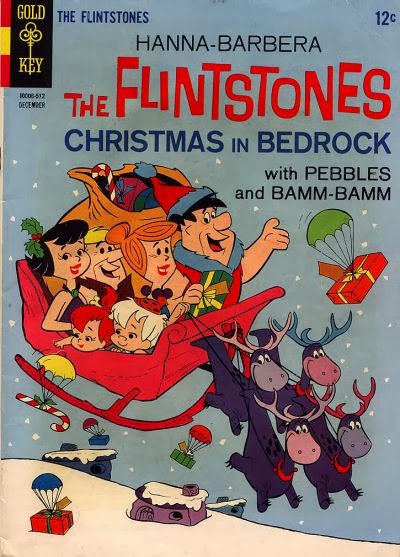
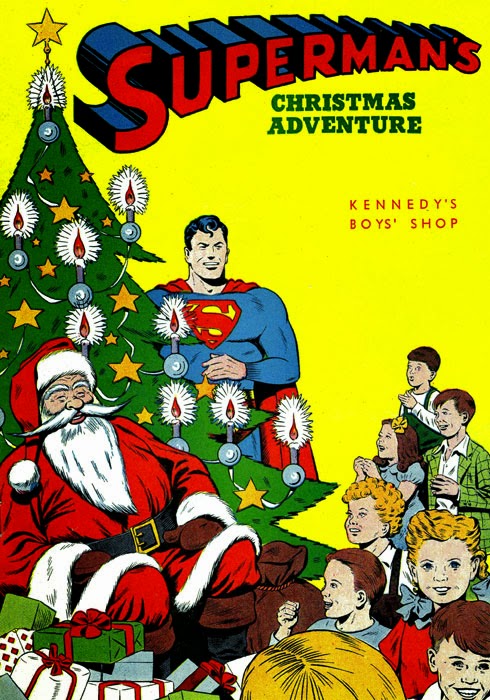
The Pops Gallery: Christmas Comic Book Covers

As a pop culture obsessive who also happens to love the holidays, there are a lot of chunks of Xmassy media that stir up my bubbly Christmas bowl of nostalgia. In addition to the music, TV shows, books, and movies, there are the holiday themed comic books from the entire history of the medium. Not every story is a gem, of course, but there are some books (including the fantastic ARCHIE COMICS DIGEST #3, featuring a slew of gorgeously rendered holiday stories mostly from the 1950s and '60s) that I pull out every December and re-read while sipping some spiked egg nog. This installment of the Pops Gallery gifts you with a whopping stocking full of 101 classic Christmas comic covers from the Golden, Silver, and Bronze ages.