Showing posts with label star trek. Show all posts

Wednesday, May 15, 2024

Pops Watched TV: STAR TREK: PICARD

SPOILERS AHEAD: 

I rewatched the finale of STAR TREK: PICARD last night because I was confused by how unmoved I was on my first viewing. I’m a very recent NEXT GENERATION convert, I didn’t love the show in its initial run, but during lockdown, I binged the whole series and finally got it. And what made it ultimately work was the relationships between the characters. 

So the first two seasons of PICARD (which tried, like most modern TREK, to turn the franchise into an action series) left me mostly cold. But this third and final season leaned SO heavily into TNG fan service (bringing back the entire crew with the exception of Wesley Crusher…. Poor Wil Wheaton) that, especially knowing it was the end, actually worked for me (I confess to crying a few times). Except for one, common gripe I have with 21st century genre fiction, which ended up being the centerpiece of the whole story. 

I think my beef is that out of nowhere, Star Trek decides that Picard's true strength lies in being a father, which to me is a slap in the face of the character's entire history and legacy. It's just the latest in a line of modern pop culture bows to mainstream "live laugh love" sensibilities.... Batman, Superman, Iron Man, James Bond, Black Panther, and now Jean-Luc Picard.... it's not enough that they saved the world / universe time and time again, their legacies are inadequate unless they've sired an offspring. This is not a slag against parenthood... it's against patronizing storytelling. 

Prior to the finale, I’d have bet my paycheck (which, granted, is not a lot of money) that the show was going to end with Jean-Luc Picard making the ultimate sacrifice and dying to save the universe. They even had a number of “goodbye” scenes that certainly made it seem that way. But instead, in the ultimate confrontation with the Borg, Picard simply tells his assimilated son that he’s “the piece of me I never knew was missing,” and the power of love severs the tie with the Borg, allowing the crew of the Enterprise to destroy the threat and everyone lives happily ever after. Yawn. 

Picard didn’t have to die. But the ending of the TNG finale, “All Good Things….” was (*to me) a far, far more satisfying conclusion than this was. To make the end of this character's 30-plus year story all about a character we just met? Nope. 

As always, your mileage may vary (particularly if you yourself have kids).

Originally posted on social media, April 26, 2023

Pops Watched TV: STAR TREK: STRANGE NEW WORLDS and SUPERMAN & LOIS

NERD ALERT: 

I’m currently rewatching season one of STAR TREK: STRANGE NEW WORLDS in anticipation of season two premiering on June 15th, and am loving it just as much the second time. Not really being a fan of any other modern iteration of Gene Roddenberry’s brainchild, I had fairly low expectations for this TOS prequel (of sorts), but the superlative casting, throwback sensibility to classic TREK, and (mostly) episodic nature of the series completely won me over, making this not just the best TREK since the underrated ENTERPRISE, but hands down my favorite genre show on TV right now. 

Meanwhile, the third (and probably final*) season of SUPERMAN & LOIS is a real head-scratcher, eschewing the deft balance of adventure and soap opera of the first two seasons for a story that focuses on Lois Lane battling breast cancer (coincidentally getting treatment alongside a supervillain who’s also the secret wife of the season’s big bad, Bruno Mannheim, who’s also coincidentally the father of Natalie Irons’ new boyfriend!). I’m not against bringing some real-life drama into a superhero story, but this season has been so relentlessly downbeat (sad music theme in every episode and Superman doesn’t even appear in costume in one of them!) that I have to sometimes remind myself I’m watching a superhero show. (Additionally, this season finally fell into the Berlanti pattern of revealing secret identities to every other person on the show.)

Watching both of these series at the same time, I’m again frustrated by the fact that almost every superhero (and other genre) show feels the need to tell season-long arcs instead of individual stories. STRANGE NEW WORLDS has reminded us of the power of short-form storytelling in genre television, and I wish S&L had gone that route (it played with it a bit in the first season). If it does indeed fall under the CW cancellation knife, its legacy will mostly be that of a sadly missed opportunity.

* Turned out to not be true, a fourth and NOW final season premieres in 2024. 

Originally posted on social media, June 8, 2023

Tuesday, May 14, 2024

Pops Watched TV: STAR TREK: STRANGE NEW WORLDS "Ad Astra Per Aspera"

The second episode of STAR TREK: STRANGE NEW WORLDS season 2, “Ad Astra Per Aspera” was not just another solid episode of the best TREK in decades, it almost felt to me like a bit of a swipe at some of the things that make me dislike DISCOVERY. 

In the episode, Captain Pike’s “Number One,” Cmdr. Una Chin-Riley (Rebecca Romijn) is on trial for hiding the fact that she is a genetically-modified Ilyrian from Starfleet (an organization that, in the wake of the Eugenics Wars on Earth, banned such beings from service). In the end (spoiler alert), she is cleared under a Federation law that persecuted beings can be granted asylum by Starfleet, which is in essence what happened with Una. 

The anti-DISCOVERY elements of the episode play out in two ways (three, if you count the ongoing episodic nature of the show): First, desperate to find out how Starfleet discovered Una’s true species, security chief La’an Noonien-Singh (Christina Chong) asks Cadet Nyota Uhura (Celia Gooding) to release the ship’s personal logs to her, which is against Starfleet regulations. Uhura refuses the order. On DISCOVERY, seemingly every crew member flouts Starfleet regs so often that it’s basically anarchy on that ship (this is not to say that the crew of the Enterprise doesn’t break the rules from time to time… both Spock and Pike have done so already… but they have a bit more authority to do so than the young cadet). 

Secondly, while this is a very emotional episode, there are almost no tears shed. The restraint shown by both the characters and the show is (again) in stark contrast to DISCOVERY, which I had to stop watching in part because EVERYONE CRIES IN EVERY SINGLE EPISODE. 

Maybe I’m reading too much into it. But again, despite a super solid first season of SNW, I’ve been so burned by modern TREK again and again that I find myself bracing for the worst. So far, this show has not let me down, and its commitment to honoring Gene Roddenberry’s vision without being a slavish retread makes it appointment television for me, something I haven’t had in many years.

Originally posted on social media, June 25, 2023

Monday, June 28, 2021

Guy Walks into a Bar, Asks for a Beer, Gets into a Fight, Gets Stabbed, Kills Some Dudes, Tosses a Bill on the Bar, Leaves without Saying Goodbye, and Goes Home to His Huge Loft Apartment to Listen to Sinatra

(A Subjective Take on Movie and Television Tropes)

Movies and television couldn’t exist without tropes. Genre fiction in particular is reliant upon themes and ideas that we’ve seen a hundred times (let’s face it, at base level, there are only so many three-act stories to be told). It’s what each individual project does with these recurring motifs that make them feel either new and thrilling (Hereditary) or tired to the point of cliché (The Conjuring: Any of Them).

Certain tropes have become such an ingrained part of filmed fiction that we just go with it to keep the story moving, and, sometimes even enjoy them on their own merits. What follows is a (subjective, as always) list of movie and TV tropes, some that I hate, some that I can deal with, and a few that I even like, rated on a scale of 1-10, being least to most annoying. Note that I am primarily discussing genre films here, and there are certainly exceptions to all of these (some of which we’ll discuss). 

1. SHITTY SHARPSHOOTERS (Annoyance Level: 10)
My most hated cliché in film and television: Our hero is outgunned ten to one. He has to run across an open parking lot to get to safety while being sprayed with hundreds of rounds of automatic gunfire by highly-trained snipers. And every single bullet misses. This particular cliché is borne (no pun intended) of the kind of one-upmanship that forces filmmakers to elevate a simple gunfight (that has real tension and sense of danger) to a cartoonish spray of so many bullets that, in real life, would undoubtedly make Swiss cheese out of the fleeing protagonist.
SEE: John Wick, The Punisher (all iterations), Captain America: The Winter Soldier, most James Bond films. 


2. EXPLODING EVERYTHING
(Annoyance Level: 6)
Sometimes in movies, things blow up. People like to see things blow up. BOOM! Did you see the thing blow up? Wasn’t it cool? Explosions are fine when the item making the big boom is something incendiary enough to create such a massive fireball (usually being things with gas tanks). But in too many movies, items that would never create an explosion bigger than your average bootleg firework erupt like a silo full of TNT.

SEE: Road House, The A-Team, the Lethal Weapon series, any Michael Bay film. 


3. SINGING WOOD
(Annoyance Level: 2)
It is a cliché etched in Hatori Hanso steel: No metallic weapon—knife, sword, scimitar, sling blade, screwdriver—can be extricated from any housing without it making a sharp, ringing sound… even if the sheath is a leather scabbard or wooden knife block. Simple physics can be distracting when ignored (other annoying impossible sounds: screeching tires on dirt roads or grass, soft-heeled shoes making clopping noise, that goddamn red-tailed hawk speaking for every predatory bird on Earth).
SEE: Gladiator, Kill Bill (both volumes), Xena: Warrior Princess, Conan the Barbarian


4. GENERIC DRINK ORDERS / UNCLOSED TABS
(Annoyance Level: 5)
While blatant product placement can be a distraction, it’s nowhere near as annoying as when a character bellies up to a full bar and orders, “A beer.” As someone who’s slung suds for a living, I can tell you that’s the beginning of the order, not the end (unless the bar is in England or some other godforsaken land where the pub only has one thing on tap)!
Equally as distracting is the frequency with which characters will abruptly leave a bar or restaurant without (a) finishing their drink or (b) paying their tab, often just tossing a few bills on the bar, presumably hoping that it’ll cover it. But what if it doesn’t? And what about the tip? What about the tip?!? 
SEE: Blue Bloods, Cocktail (ugh), Cheers (don’t get me started on Cheers)


5. KILLING WITH IMPUNITY
(Annoyance Level: 8)
I get it, sometimes a friend or family member gets killed or kidnaped and the cops just won’t do what needs to be done and so you gotta take the law into your own hands. Hey, we’ve all been there. But when revenge becomes a killing spree that leaves a string of dead bodies across numerous time zones and international borders, why does it seem like almost every vigilante just goes back to life as normal (at least until the sequel when another family member is killed or kidnaped again)?
SEE: Taken, Taken 2: The Tookening, Taken 3: Tooked Again, pretty much anything with Liam Neeson


6. PROBABLY TOO BEAUTIFUL HOMES
(Annoyance Level: 1)
Okay, sure, that spacious downtown loft with the exposed brick and beams and the floor-to-ceiling windows and the hardwood floors and the chef’s kitchen and the amazing lighting and all the plants that aren’t dead would be beyond the financial reach of that waitress that accidentally saw that mob hit. Most of the time, I don’t care. Show me the houses beautiful! I’ll never be able to afford one, let me live vicariously! I’ve stuck with terrible movies just because I wanted to see more of the fabulous living spaces.
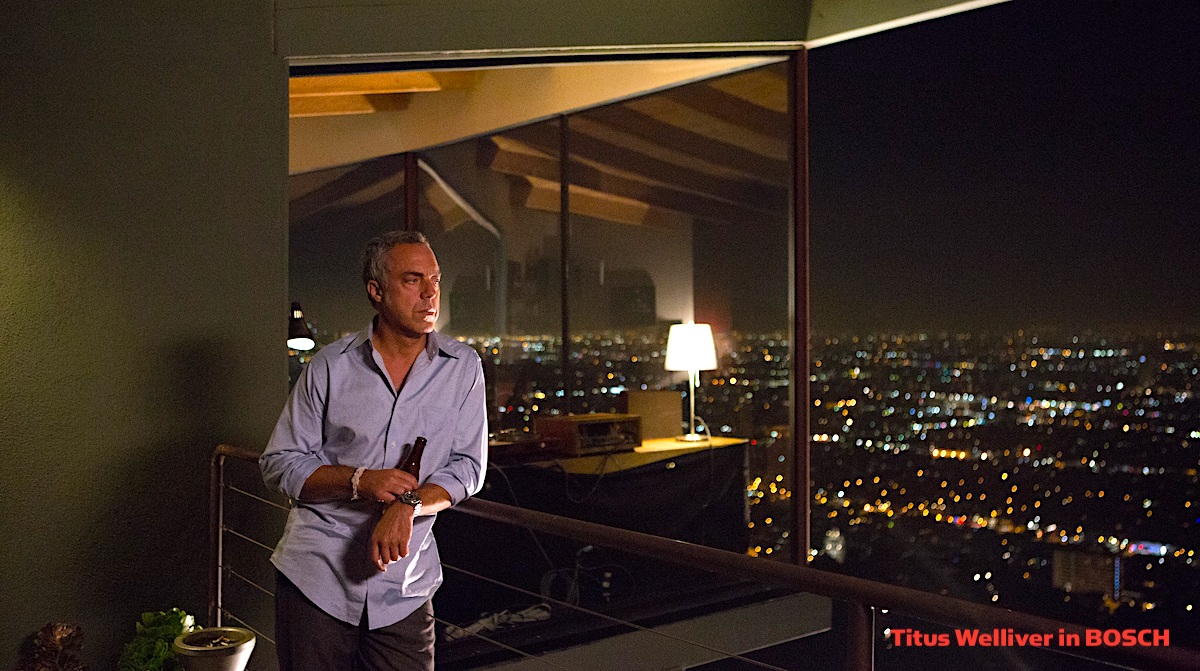
SEE: Ghost, Bosch (Harry got that movie money), Rear Window (but I will not say FRIENDS. Fuck them).


7. RESILIENCE (TO AN EXTENT)
(Annoyance Level: 4)
One of the many things that makes Die Hard the best action film of all time (but it’s not a Chr… oh, forget it) is that John McClane gets hurt. We feel his pain as he struggles to defeat Hans Gruber’s merry band of bandits with bloody feet and bruised bones. Sure, with each successive sequel, despite getting older, Bruce Willis’ grizzled detective seems to develop nigh-invulnerability, ultimately shaking off having a building collapse on him in A Good Day to Die Hard like a bald Wile E. Coyote. But anyone who’s ever been in a real brawl knows that, again, if movies were like real life, all physical confrontations between regular humans would be over as quickly as they began. Being punched / stabbed / shot / et al hurts! So it doesn’t bother me too much when Bruce Lee gets back up after being kicked around by a hundred martial arts assassins. Nor should it you.
SEE ALSO: They Live, The Killer, Oldboy, and all of the Fast & Furious franchise (it’s all about family, you know)


8. REALLY, REALLY RECKLESS DRIVING
(Annoyance Level: 9)
I’d imagine Driver’s Ed teachers scream at the TV an awful lot. Let’s set aside the removal of all rear view mirrors in cinematic vehicles, I understand why, but c’mon, people, at least put on your seatbelt! And, fer cryin’ out loud, if you’re in the driver’s seat, stop looking at the person next to you or in the back seat while conversing with your shotgunners! They can hear you just fine! Keep your eyes on the road, pal!
As for car chases, in a post-Bullitt / French Connection world, they are rarely believable in the slightest (Ronin being one exception). Anyone who’s been in the midst of a congested rush hour knows that some crazy (Baby) driver trying to race 100 MPH on a busy street ain’t gonna get that far (even if they do jump the curb). I’ll suspend my disbelief to an extent, but when a speeding car chase suddenly goes against traffic, that’s where I draw the line. It’s simple physics, people!
SEE: Iron Man 2, at least one Mission: Impossible flick, and I think most of the Bourne movies


9.  A CERTAIN AMOUNT OF FAN SERVICE
(Annoyance Level: Varies wildly)
While it wasn’t enough to salvage the entirety of Wonder Woman 1984, Lynda Carter’s cameo as Asteria did elicit a whoop of joy from this aged fanboy who thought the absence of an appearance by TV’s Wonder Woman of the 1970s was one of the first film’s few missteps (that and giving Ares a thin mustache and a sibilance). As most genre filmmakers in the 21st century are lifelong fanboys themselves, it’s understandably difficult to resist the temptation to put in everything they’ve been dying to see in a Star Wars / Trek / James Bond / Spider-Man / et al film since they were kids playing with action figures. And a little bit of fan service is a beautiful thing (FX’s Fargo pays just the right amount of homage to its cinematic inspiration). But when it’s overdone (Terminator: Genysis, Daredevil (the movie), any and everything by JJ Abrams), it becomes more distracting than enjoyable.
SEE: The Avengers, Better Call Saul, Star Trek: Picard (right on the edge, that last one). 


10.  ACCENTED ENGLISH IN LIEU OF FOREIGN LANGUAGES
(Annoyance Level: Contingent upon how good the accent is, but on average, about a 3)
It’s a ludicrous construct if you think about it. But having an actor speak English with a foreign accent in place of using the character’s native language has become ingrained shorthand in film and TV. It only truly becomes noticeable if only SOME of the actors are doing it (ala The Death of Stalin). I have a much harder time with a science fiction film in which alien cultures have a mix of Earth accents. C’mon, Star Wars, either make them all from Space England or not!! Make up your mind!
SEE: All American Godzilla movies, the Mission: Impossible franchise, Jojo Rabbit, and anything else with Nazis. 


11. GLIBNESS IN THE FACE OF DEATH
(Annoyance Level: 3)
It’s called “comic relief” for a reason. If characters reacted to life-threatening situations as you or I would in real life, movies would be populated with people mostly doing nothing but screaming, running, and cowering in the corner. Oh, and live-streaming the incident on Instagram. But movies that get our heart rates up need to have leveling agent, which usually takes the place of a well-turned phrase or perfectly-timed joke. Sure, pith in the face of peril is as unrealistic a scenario as being stalked by a knife-wielding serial killer or a marauding alien, but when they work, it as much a tension breaker as when your racist uncle decides to leave the cookout early. Or something. I’m having a hard time coming up with a funny simile, perhaps because my life is not currently being threatened.
SEE: Independence Day, Midnight Run, Thor: Ragnarok (actually TOO many jokes in this one!)


12. IN SPACE, EVERYONE CAN HEAR EVERYTHING
(Annoyance Level: 5)
Adherence to the “science” part of science fiction is spotty at best in most movies and TV shows, nowhere more so than ignoring the fact that the vacuum of outer space precludes there being sound (hence, Alien’s classic tag line, although since there are audible explosions in that film, I have to imagine you could also hear someone scream). One of the things I loved about the Battlestar Galactica reboot was its silent space battles). Sure, when the Phantom Zone villains are having a freaking conversation on the moon in Superman II, that’s a bit much to take. But you know what? This stuff’s not real. Let the Star Destroyer and the Klingon Bird of Prey go boom. It’s fine.
SEE: Again, almost everything except Battlestar Galactica, 2001: A Space Odyssey, and one quick scene in 2007’s Star Trek reboot. 


13. FRAAAAAANKIE!
(Annoyance Level: 1, and then only if it’s “My Way” or “New York, New York”)
Music Supervision is a great job. You help filmmakers select and/or secure songs to be used in movies and TV shows. The best ones have an encyclopedic knowledge of music that allows them to avoid the usual aural clichés that have been done to death (can we just ban “Bad to the Bone” and “Walking on Sunshine” from ever being used in anything ever again, please?).
But while some might think the work of Frank Sinatra is overused, I shall never wince at the placement of a well-placed Sinatra side. He’s got a song for every possible human emotion you can wrest out of existence, and most of the time, they’re great. I mean, there are exceptions (I’d be okay with never hearing “New York, New York” again as long as I live, let alone when a movie transitions locations from the heartland to the Big Apple). But you can plop “Fly Me to the Moon” or “The Best is Yet to Come” in every wedding scene put to film— or “One for My Baby” over a sad guy at a bar — or “It Was a Very Good Year” any time an older character is feeling wistful— and I’d be okay with it.
SEE: Blade Runner 2049, The Marvelous Mrs. Maisel, Elf


No doubt some of you disagree with my sliding scale on these tropes, and probably have your own list of things that grate your cheese when you’re trying to relax with eight consecutive episodes of that show you’re streaming. Tell ya what… I’ll meet you at that place near the thing that we went to that time and we’ll hash it out over a pint of unnamed beer. Just promise me that if it gets heated, you won’t stab me and walk out on the tab. 

_____________________________
READ THIS PIECE ON MEDIUM. 

Sunday, February 21, 2021

SHIPS IN A BOTTLE: How STAR TREK Got Me Through Covid, Quarantine, and the End of Trump


Normally, I’m not a trendsetter. I don’t beta test anything, I like to wait until the kinks get worked out. But when it came to the Coronavirus, apparently I couldn’t wait. Working as a bartender, I contracted the disease sometime over the weekend of March 13-14, 2020, the last few days before the shutdown in NY and NJ. While my infection took a week or so to fully bloom, by the time it did, I had developed some of the more disconcerting symptoms: Difficulty breathing, incredible fatigue, and a hacking cough to wake the dead. A trip to the local CityMD confirmed: I had a heaping helping of Covid-19 with a side of pneumonia. The doctor said that under normal circumstances, I’d be hospitalized, but given the state of those institutions at the time (swamped and deadly), he thought it was actually better for me to tough it out at home (where, I guess I should note, I live alone). I was prescribed some heavy duty Rx (which my friend T.Jay, who also risked his health to drive me to the doctor, graciously picked up for me) and told to try to get as much rest as possible. 

This seemingly simple directive proved difficult. Despite being constantly exhausted, sleep was elusive, mostly due to—you know—not being able to breathe. I spent my days on the couch, and my nights propped up in bed with every pillow I could find, like the Elephant Man, afraid that if I somehow fell into a horizontal position, I would instantly die. When the coughing fits would ensue, I’d close my eyes and speak my mantra, softly saying, “Breathe... Breathe... Breathe…,” over and over, until my dumb body finally listened. 

In addition to the drugs, the tea and water, the crackers, and the clementines (about all I could ingest), there was, of course, TV. A lot of TV. Like… all the TV. My first quarantine binge was a rewatch of MAD MEN, the entire seven seasons of which I managed to get through in a matter of weeks. And geez, that Don Draper is a piece of work, am I right? 

But that first week of being sick, I also decided that I would begin each night in bed by going back to one of my all-time favorite shows, albeit one I don’t own (yes, I still own hard media) and hadn’t seen in a long time: STAR TREK

And when I say, STAR TREK, I mean the original series (or, TOS, in the proper parlance). I’m kind of a classicist. For me, the original is usually the best. And with something as groundbreaking as STAR TREK, it’s hard to be objectively critical towards the relative shortcomings of its lesser episodes in light of everything that the series got right. 

I didn’t exactly “binge” TREK. I would usually do only one episode per night (via Netflix), and then switch to something for which I felt free to pay half-attention while fighting to fall asleep, not caring if I dozed off in the middle of, say, THE BLACKLIST or CRIMINAL MINDS (a terrible program I only watch because of a Paget Brewster obsession that I’m certain she’d find nothing but charming).

In short time, my nightly STAR TREK viewing became kind of the highlight of my day. I found myself looking forward to bedtime (even though, let’s be honest, given the circumstances, that could’ve been 7pm if I’d wanted) and my nightly voyage with the USS Enterprise, boldly going where no man (ahem) had gone before. There were episodes I remembered vividly, ones I sort of hazily recalled, and others I probably hadn’t seen since watching reruns as a kid at my grandparents’ house when they’d babysit me in the 1970s. 

I may not have remembered every episode with dilithium-crystal clarity, but I knew the crew like they’d been at my side since childhood. The cocky but virtuous (well, mostly) Captain James T. Kirk; The steadying presence of First Officer Spock, the human / Vulcan hybrid battling to keep that former half of his psyche buried, often unsuccessfully; The cantankerous conscience of the ship, Dr. Leonard “Bones” McCoy; and the multiracial bridge crew, each a valued member and distinct personality in their own right. 

What resonated most with me every night as I sat ramrod in bed was the underlying message that creator Gene Roddenberry imbued into the series and for which I found myself in dire need: Hope. In episodes both good (“The Devil in the Dark,” “Amok Time,” “Mirror, Mirror” to name a few) and not-so-good (“Spock’s Brain,” “Spectre of the Gun,” “For the World is Hollow and I Have Touched the Sky”), Roddenberry’s vision of a future in which humanity had evolved to excise our baser instincts in favor of a more humanist, tolerant, and forward-looking existence was an even more soothing balm than the dollops of Vicks VapoRub slathered on my wheezing chest. 

And this optimistic vision of the future wasn’t just helping me to fight my own personal health crisis; perhaps even more importantly, it was giving me a much-needed catharsis from the other deadly scourge America was suffering, the final year of Donald Trump’s presidency. Space Force notwithstanding, the Trump administration (or, “administration,” as it should really be in quotes given its lack of administrating) espoused policies and attitudes that were completely anathema to those that Starfleet will come to represent in a few centuries. I NEEDED to see people—fictional, sure, but whatever—wanting to expand their horizons, striving to help others (even sentient rocks!), to do the right thing because it’s the right thing to do, even at the risk of their own safety. I don’t think Bones would’ve had to yell at anyone on the Enterprise to wear a mask.

My daily STAR TREK ritual continued after I recovered from the virus, eventually shifting from bedtime viewing to what I’d put on the tube while I was making and eating dinner every evening (once that ritual resumed). As I wended my way through the third, final, and—as universally acknowledged—weakest season, I started to wonder what was going to replace it in my queue once I hit the final episode?

There had been other TV binges through quarantine, of course. I plowed through THE TWILIGHT ZONE and THE DICK VAN DYKE SHOW and BOSCH and SCTV and DARK and SUCCESSION and OZARK and some others I can’t quite think of right now because I’m getting bummed out at the thought of how many hours I’ve spent watching TV the past eleven months but ANYWAY MY POINT IS…. None of those shows provided me with the kind of catharsis that STAR TREK did. Okay, maybe DICK VAN DYKE came close (albeit in a very different, more personally aspirational way). 

The logical transition was to jump to STAR TREK: THE NEXT GENERATION. But here’s the problem: I didn’t like TNG (again, vernacular). I watched it sporadically in its initial run from 1987 to 1994, but it never clicked with me the way TOS did. Particularly as the show became more invested in family dynamics (in the final season, there are THREE EPISODES IN A ROW about fathers and sons!) and romantic entanglements (I’m sorry, you know who should never get together? A Klingon and a Betazoid), it just never felt like the TREK I loved.

Also, Wesley Crusher. Never forget Wesley Crusher. Lord knows I’ve tried. 

But, with a little prodding from my friend Adam (an avowed TNG acolyte whose opinion I do value) and knowing how much my brother, Ken worships Jean-Luc Picard, captain of the Enterprise-D, I decided to give TNG another shot, from the beginning. 

It was a tough go at first. Unlike TOS, which found its footing rather quickly (after the post-pilot reboot, of course), TNG took a while to figure out who goes where and how everyone fit together on the sparkly, if flatter new Enterprise (the bridge of which always evoked more an airport VIP lounge than the command center of a Federation starship to me). Heck, they went through like three different chief engineers before finally realizing Geordi LaForge was the obvious choice for the gig. 

Also, Wesley. There was Wesley. 

But by the second season, I found myself beginning to warm up to the show, and by the time Picard was assimilated by the Borg at the end of Season 3, I was all-in. And while TOS will always be my favorite, I have to grudgingly admit that if I had to pick a captain under whom to serve…. It’d be Picard over Kirk. It’s not just that Jean-Luc (the Frenchman with the British accent) has more impulse control and better elocution than James Tiberius (pretty sure Picard knows how to pronounce “sabotage”), he also exudes the kind of bold, but smart leadership that inspires more confidence than Kirk’s oft-reckless, Shakespearian breach-diving. Kirk might be more fun than Picard (and slightly less scary), but he’s also far more likely to get your red shirt disintegrated (with you in it). Also, I’m sure that my being older makes it easier for me to relate to the fiftyish—but still dashing—Picard. Not that I’m dashing. But I am fiftyish (heh). 

But it’s not just Picard that endeared me to TNG this time around. I actually grew to care for the characters (although no, I was not sad to see Wesley go in Season 4). I came to love Data (even if, to me, it seems plainly obvious from the start that he absolutely has emotions); I stopped thinking of Will Riker as simply a chair-straddling cheeseball; I began to see the need for Deanna to have the seat next to the captain on the bridge (although I wish the character had been treated better in the series, and wasn’t mysteriously absent in some episodes when she’d be most needed). I thought Ro Laren was a fantastic addition and wish Michelle Forbes had been willing to commit to the series as more than just a sometimes guest star. But more than the characters themselves, it was their interactions that came to define the series, their incredibly believable relationships with each other, both one-on-one and as a larger group. I still had issues with the more soap operatic installments, shows that centered around children, and pretty much every single Klingon-centric episode (Honor! Tradition! Honor! WE GET IT ALREADY! Geez, give it a rest, shellhead!). And, again, the quality of the shows varied widely from great (“Darmok,” “Chain of Command,” “Sarek”) to, um, WTF (“The Child,” “Sub Rosa,” “When the Bough Breaks,” and of course the infamous “Code of Honor”). But once it gelled, this cast and crew became a true ensemble that engendered the same kind of inspirational affection I’d felt for Kirk, Spock, Bones, Scotty, Sulu, Uhura, and, uh, maybe sometimes Chekov. 

(I should also make a note that I followed up every episode of both series the next day with its corresponding installment of the fantastic MISSION LOG PODCAST, in which hosts John Champion and Ken Ray [since departed] pull apart each episode with wit, intelligence, and alacrity [sadly, a scarcity in podcasts]. If you’re into TREK at all, I can’t recommend it enough. As of this writing, they’re up to Season 5 of DS9 [with Norman C. Lao replacing Ken Ray as of 2019], so there’s lots more to come.)

As my TREK marathon stretched out over month after month I realized it was actually going to outlast the Trump Administration, which felt… really good. And while the Orange Overlord’s ouster didn’t quite go as planned, it was still a happy ending (even if, as with TREK, it was an open-ended finale). 

And then, on Thursday, February 18, 2021, after almost a full year and 256 episodes total (80 for TOS, 176 for TNG)… I was done. I sat down with my “steering wheel” (as my brother calls my generous portioning) of rigatoni with red sauce and a bottle of Bordeaux (felt appropriate) and settled in for “All Good Things…,” the feature-length 1994 finale of STAR TREK: THE NEXT GENERATION. In the episode, Q, the omnipotent, extra-dimensional thorn in Picard’s side (kind of his Mr. Mxyzptlk, I always thought) reveals that the trial of mankind begun in the series’ pilot, “Encounter at Farpoint,” never ended, and bounces Picard between the past, present, and future to solve a potentially life-eradicating time anomaly that, it turns out, he caused himself. The crew(s) of the Enterprise prevail, of course, and mankind is spared, but Picard has a new perspective on the life he led, lives, and may one day lead. He decides to remove the arm’s length at which he’s kept his “family” and, in the series’ final, iconic scene, joins his senior staff in their regular poker game for the first time. 

I’m not ashamed to admit that I sat there with tears streaming down my face, even though I knew what was coming; “All Good Things…” is one of the handful of TNG episodes I knew well (and greatly enjoyed). My emotions were more about the totality and weight of this journey that I had taken with both Enterprises over the course of 256 (give or take) mostly-consecutive nights. I felt an overwhelming sense of gratitude for the aid that Gene Roddenberry (et al) had given me in dealing with a serious illness, a forced, solitary confinement in my home, and a daily reminder that the fate of my country and the world was in the hands of a malevolent being that made Khan Noonien-Singh look like a Keebler Elf (with much better pecs). 

So now what? What takes the place of these two shows? I guess I could go back to the 1973-74 animated TREK series (which is now considered canon), but I don’t have CBS All-Access (which also precludes giving PICARD and LOWER DECKS a shot). I’ve watched all the movies starring both casts (the TNG films being even more spotty than the TOS ones… call me crazy, STAR TREK: THE MOTION PICTURE remains my favorite film starring the original crew, and I really like the much-derided NEMESIS, the final TNG flick). Despite getting well into Season 2 of DEEP SPACE NINE, I gotta say, it does nothing for me (if I have to hear the term, “gold-pressed latinum” one more time, I’m going to explode). I’ve only ever seen a few episodes of VOYAGER, but it’s my mom’s favorite, so I’ll give that a shot. I sampled ENTERPRISE (not bad, I’ll probably finish that one next, timeline be damned). And I just recently caught up with the first season of STAR TREK: DISCOVERY thanks to CBS’ rerunning on its old-fashioned non-streaming tee-vee network. It’s fine. I guess. 

But I have the same issue with every post-TNG iteration of STAR TREK, and it’s something that actually began in later seasons of TNG. From the beginning, Gene Roddenberry insisted that in the future he created, conflict would mostly be a thing of the past. Granted, seeing as how conflict is the very foundation of drama, you’d think this would be a bit of a hindrance to storytelling, but TOS managed to work around it (and few would argue that the relationship between Spock and Bones was sunshine and lollipops). But there were specific aspects of 20th century society that he wanted to paint as anachronistic: racism, sexism, capitalism, religion, and poverty, to name a few. Those things could be shown as existing on more unenlightened alien worlds, but in the Federation… nuh-uh. 

Not every writer and producer who worked on STAR TREK under The Great Bird of the Galaxy (as Roddenberry was known) shared this vision, and in the wake of the series creator’s death in 1991, those thematic shackles were lifted (they had actually already begun to loosen after Roddenberry took a less active role in the series after the first season). Crew members bickered more, altruism seemed to take a back seat to lesser virtues with some characters. The existence of God and money in the 24th century seemed to be at the whim of the writer of any given episode (how can you “buy a round” in Ten Forward if everything costs nothing?). The different shows’ inconsistencies and darker tones may have made things easier for the creators, but for me…. Something got lost. 

Pop culture has always played a huge role in my life. Some might argue too much so, but that’s (like everything) a subjective call. If you’ve read this far, you probably don’t find fault in shedding tears over fictional space explorers from the 24th century. But even if you can’t relate to this kind of connection to a 55-year-old TV franchise, please try to understand that what I’ve detailed here is not hyperbolic. 

I always knew that STAR TREK was more than just an iconic science fiction franchise, I always understood its importance in the realms of culture and science, I just never dreamed that it would come to mean so much to me in a time of strife. I NEEDED that daily escape into a world in which people are GOOD and things are BETTER and disease and hate and selfishness are things of the PAST as much as I needed the antibiotics and steroids prescribed to me. Maybe more. Beverly Crusher may not have waved a beeping, blinking, gray hand-held device over my chest to instantly cure my Covid / pneumonia, but the fictional world in which she lives played a big role in keeping me from falling into despair during the past, really difficult eleven months. And for that, I’ll always be grateful to the crews of the USS Enterprise and those who made it so. 

----------------------------
STAR TREK TOS & TNG posters by Dusty Abell