With MAN OF STEEL right around the corner, speculation is running high as to just how different—aside from the lack of red shorts—Zack Snyder’s Superman is going to be from what’s come before. How many surprises can there be for a character that’s been in the pop culture spotlight for three quarters of a century?
But one of the reasons the character’s been around so long is that there’s always something new to pull out of that blue sleeve. And even his past contains some things you may not know. Here are ten such little known facts from Superman’s vast history that may well surprise you (unless, of course, you are a comics fan, in which case, Shh! Don’t spoil it for the laypeople!).
1. SUPERMAN WAS ORIGINALLY CONCEIVED AS A VILLAIN
In 1933, the third issue of the fanzine, SCIENCE FICTION: THE ADVANCE GUARD OF FUTURE CIVILIZATION featured a story by its publisher, a young writer named Jerry Siegel, entitled, “The Reign of the Superman,” with illustrations by Joe Shuster. The story tells of an evil scientist who chooses a homeless man to be the test subject for an experimental serum that grants telepathic powers. When the formula proves a success, the empowered vagrant kills the scientist before he can use the serum on himself. Inspired to take over the world, the Superman is shocked to discover that the effects of the serum are temporary, and he soon loses his powers, as well as his world-dominating aspirations.
But Siegel was more interested in writing about heroes who could battle against the world’s evils, and so (with Shuster again on art duties) he set about reworking the powers and concept of his Nietsche-inspired character. It would be another five years before they were finally able to sell their revamped Superman to National Comics for a whopping, copyright-forfeiting $130.00.
2. LEX LUTHOR USED TO HATE SUPERMAN FOR FOLLICULAR REASONS
Over the years, Superman’s arch-enemy has evolved from evil scientific genius to evil corporate overlord to evil scientific genius corporate overlord, but his abiding hatred of the hero has never wavered. These days, the general gist is that Luthor is envious of Superman’s powers and popularity, mistrustful of his motives, and aggravated by his altruism.
But in the simpler Silver Age, the reason was much more superficial, as explained in ADVENTURE COMICS #271 (1960): Friends as teens, Superboy built a fully stocked laboratory for the young Lex Luthor. When an awry experiment caused a fire in the lab, the Teen of Steel used his super breath to blow it out, but the resultant mixture of gaseous chemicals caused permanent hair loss for his now-ex pal, who swore he’d get even (he also accused Superboy of jealousy and was mad that a huge experiment was ruined, but it was mostly the hair thing). Turning your back on the coolest friend you could ever have because you think he made you bald? Vanity, thy name is Lex (a first name, by the way, that was finally given to the previously mononymous Luthor in this very tale).
3. IT’S NOT AN S
Actually, if you’ve seen the third trailer for MAN OF STEEL, then you do know this one, but the evolution of Superman’s trademark chest emblem is an interesting story. For decades, the symbol was indeed an S, and Clark himself chose the rather immodest name for which it stood. 1978’s SUPERMAN: THE MOVIE decided to adorn Superman’s birth daddy, Jor-El with the symbol as well, altering its meaning to stand for the House of El, the resemblance to our letter S being a mere coincidence (and, in that film, as well as MoS, it’s Lois Lane who gives Kal-El his nom de guerre). DC Comics retroactively adopted this idea, and while the precise meaning of the Kryptonian glyph has shifted in the past three decades, one thing is for sure: It’s not an S.
4. IN COLLEGE, HE FELL IN LOVE WITH A MERMAID
Superman’s girlfriends over the years have almost all had one thing in common: Alliterative names beginning with the letter L: There was Lana Lang, his childhood crush, Lyla Lerrol, the Kryptonian actress he fell in love with during a time-travel trek to his home planet, and of course, the intrepid reporter, Lois Lane. And then there’s Clark Kent’s college sweetheart, a wheelchair-bound beauty named Lori Lemaris.
Introduced in a flashback story in SUPERMAN #129 in 1959, Lori cast such a spell on Metropolis University student Clark Kent that he proposed marriage to her, despite not knowing why she always had to cut their dates short to return home by 8pm. When Lori reveals she knows Clark is Superman due to her native people’s telepathy, Clark is stunned to learn—because he would never use his X-ray vision to peek under the blanket she always wore—that he has fallen in love with a mermaid from Atlantis, sent to study the progress of we “surface people” (the 8pm curfew was so she could soak in a tank of water, of course).
Despite their love, interspecies relationships were still frowned upon in Silver Age comics, so Lori returned to the sea, leaving behind a broken hearted Young Man of Steel. Wah.
5. SUPERMAN DOES NOT KILL
Technically, neither does Batman, but you wouldn’t know that from all the guns and rocket launchers that are mounted on all his vehicles in every Batman movie (good and bad alike). But Superman’s moral code is so exacting that he refuses to take a life, no matter how vile. Additionally, he knows that the fragile sense of trust he’s worked to earn from his adopted home would be shattered if humans thought even for a second that he would use his vast powers to exact the ultimate vigilante justice. We shall see if MAN OF STEEL's “darker” Superman adheres to this character-defining tenet or not. Let’s hope so.
6. MANY OF THE ICONIC PARTS OF THE LEGEND DO NOT COME FROM THE COMICS
Superman was such an instant smash when introduced seventy-five years ago in ACTION COMICS #1 that he very quickly made the leap to other media: comic strips, radio, animated cartoons, and even a novel. And many indelible parts of the legend came from some of these non-comic book adaptations.
The radio show introduced the Daily Planet’s Perry White and Jimmy Olsen, as well as the deadly element known as kryptonite. The newspaper itself got its name in the comic strip (replacing the comic book’s’ “Daily Star” in 1940). George Lowther’s 1942 novel, THE ADVENTURES OF SUPERMAN renamed our hero’s birth parents as Jor-El and Lara (supplanting the original Jor-L and Lora). And it was in the Fleischer Studios animated cartoons that Superman first changed clothes in a phone booth, and—more importantly—evolved from making great leaps to actually being able to fly, simply because a jumping superhero looked kinda silly in the first few episodes (The cry of, “Up, up, and away!” also came from radio, a necessity when you could only describe action as opposed to showing it).
7. THERE WAS ONCE A GOOD REASON NOBODY REALIZED CLARK AND SUPERMAN WERE ONE AND THE SAME
Since Superman and his alter ego Clark Kent were introduced in 1938, the hardest part of the story to buy wasn’t his alien heritage or his many amazing super powers. It was that nobody would recognize Clark as Superman just because he put on a pair of glasses (and changed his voice, hair and posture).
In 1978, writer Martin Pasko (using an idea by Al Schroeder III) solved the mystery in SUPERMAN #330, “The Master Mesmerizer of Metropolis!” It turns out that among the hero’s many powers is a form of super-hypnosis, which, magnified through the lenses of heat-vision-resistant Kryptonian-plexiglass eyeglasses, causes people to see Clark Kent as he wants them to: A frail, slightly balding, extremely mild mannered reporter, quite the opposite of the beefy Man of Steel. The effect is so strong that it even works when people look at photos of Clark!
Yeah, there are some holes in the theory, and, like so many stories, this idea was quickly abandoned, and to this day, the only reason nobody recognizes Clark as Superman is because of a great power we all possess: Suspension of disbelief.
8. THERE HAS NEVER BEEN A NOVELIZATION OR COMIC BOOK ADAPTATION OF THE FIRST TWO SUPERMAN MOVIES
In this age of corporate synergy and ubiquitous merchandising tie-ins, it’s practically unfathomable to imagine that not one Superman movie was adapted to either comic book or novel form prior to 1983’s SUPERMAN III (in case you were dying to read the prose version of that tale).
True, neither the two 1940s serials starring Kirk Alyn, nor George Reeves’ theatrical film, SUPERMAN AND THE MOLE MEN begged for print translations. But why was there no comic / book version of 1978’s SUPERMAN: THE MOVIE or its first sequel in 1981? Blame Mario Puzo. The Godfather author wrote the first draft of the screenplay to SUPERMAN (which included much of SUPERMAN II), and had a specific clause in his contract that no adaptation of the story could be published without his involvement. Despite numerous rewrites by subsequent script doctors, Puzo’s name remains the primary screenwriter, and as he had no interest in working on either a novel or a funnybook version of his radically altered original story, to this day, the only way to experience those first two films is to watch ‘em… which really is not a bad thing.
9. A REAL LIFE GUEST STAR APPEARED IN AN ISSUE OF ACTION COMICS ONE WEEK AFTER HIS MURDER SHOOK THE NATION.
In the olden days, Superman had to jump through an awful lot of hoops to protect his secret identity, often enlisting his pal Batman to masquerade as one of his identities whenever Superman and Clark Kent were required to be in the same place at the same time (he even had an army of robots in part for this reason, but also because they did a great job cleaning the Fortress of Solitude).
But in ACTION COMICS #309, Batman has to appear at the same live television spectacular honoring Superman as all of the Man of Steel’s friends… including Clark! And so, Superman calls in a favor from another trusted confidant… President John F. Kennedy, who slaps on some makeup, wig and glasses to pass himself off as the reporter (foiling Lois’ 548th attempt at proving Superman and Clark are one and the same).
The sad irony of this story is that the issue (cover dated Feb. 1964) hit the newsstands one week after Kennedy’s assassination (too late for DC Comics to pull the comic book from distribution), adding a heavy poignancy to a rather silly tale.
10. SUPERMAN IS MUCH COOLER THAN YOU THINK
Despite being a cultural icon for 75 years, the character that launched the entire superhero genre (perfectly synthesizing elements that existed in numerous heroes before) and solidified the nascent medium of comic books as a viable form of entertainment, Superman doesn’t get his due respect. People tend to dismiss him as being dull or too goody-goody. Common wisdom says the dark and brooding Batman or raging bad boys like Wolverine are much cooler heroes than the morally righteous Midwest farm boy in the primary-colored costume.
But here’s what most people don’t get about Superman: When he’s done right, he’s actually the coolest hero there is. It’s not that he has this long list of incredible super powers, it’s that how he treats them. First of all, he’s Steve McQueen-nonchalant about this “most powerful being on the planet thing.” It’s no big deal. Remember, he didn’t name himself Superman, and he doesn’t even think that he’s better than us. All he wants to do is help, which is the other cool thing about the guy. There’s no angsty motivation for revenge or simmering need to prove anything. He uses his powers for good because, Duh, that’s what you do.
How many of us could honestly say that, given powers and abilities far beyond those of mortal men, we wouldn’t become insufferably arrogant and use those abilities for our own benefit over that of others? Sadly, not many, which is what makes Superman so eternally cool… and also necessary.
________________________________________________________________
Originally posted on Starpulse.com, June 2013
Showing posts with label Starpulse. Show all posts
Monday, June 10, 2013
Thursday, May 03, 2012
With Great Power... (the 10 Best Superhero Movies of All Time)
As the Avengers finally assemble, bringing the biggest superhero movie yet to the big screen, we have to ask: Of all these darn superhero movies, which ones are the best? Luckily, we can also answer that question we just asked ourselves. Let the debate commence!
10) THE SHADOW (1994)
A lot of movies could’ve taken this spot on the list, but for the sake of mixing things up, I’m going with this oft-dismissed adaptation of the classic radio / pulp / comics hero (many will argue he’s not a superhero, but he fits the criteria). Director Russell Mulcahy crafted a moody, stylish art-deco period piece and the story (in which the Shadow battles the would-be world conqueror Shiwan Khan, nicely played by John Lone with a fantastically over-the-top Tim Curry as one of his minions) displays a deft balance of old-school melodrama and humor. The film’s considered a campy trifle by many fans of the character, but its real problem—and it’s a big one—is a horribly miscast lead; the smart alecky Alec Baldwin is incapable of conveying the kind of chilling dominion personified by Orson Welles in the 1930s radio show. If "The Shadow" featured a more fitting star (imagine Daniel Day-Lewis or Rutger Hauer), it would probably be held in higher regard.
9) WATCHMEN (2009)
Zack Snyder’s adaptation of Alan Moore and Dave Gibbons’ celebrated superhero deconstruction gets a bad rap. Hardcore comics purists felt that putting the exhaustive graphic novel to film was a Quixotic endeavor to begin with and complained about the alterations to the climax. Neophytes couldn’t get a lock on the hyper-specific frame of reference required to fully appreciate the film’s style and substance. But open-minded fanboys (who understand the definition of the word, adaptation) appreciated “Watchmen” for honoring the meat and the minutiae of one of the greatest super-stories ever told.
8) THE ADVENTURES OF CAPTAIN MARVEL (1941)
It’s a wee stretch to place this Republic Serial—the first live action adaptation of superhero—on this list, but of all the caped do-gooders to hit the big screen in the Golden Age, Captain Marvel (recently renamed “Shazam” by DC Comics after decades of being mistaken by most people for his magic word) came the closest to reproducing the unlimited effects of the period’s comic books. While the 12-part story (pitting Cap against a villain named the Scorpion) differs in substance and tone from the source comics, it’s an exciting, exotic tale buoyed by simple, but awesomely effective stunts and effects. Too bad the other super serials of the 40s weren’t this good.
7) X2: X-MEN UNITED (2003)
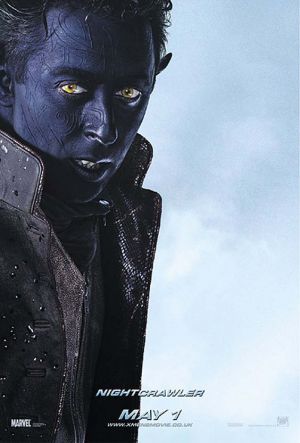
Conventional wisdom was that an X-Men movie could never be made to the satisfaction of both the demanding fanboy and a non-geeky mainstream audience, but Bryan Singer proved that premise wrong with 2000’s thoughtfully streamlined “X-Men.” The sequel picked up where the first film left off, amping up the metaphorical resonance of the social outsider longing for acceptance while sacrificing none of the epic action. The addition of Alan Cumming’s Nightcrawler, unleashing of Hugh Jackman’s Wolverine and promise of the resurrection of Famke Janssen’s Jean Grey as the Phoenix only whetted the appetites for the third entrant (which, under Brett Ratner’s hand, unfortunately fell like the Angel… er, Icarus).
6) BATMAN BEGINS (2005)
In 1989, comic book fans soiled their underoos over Tim Burton’s “Batman,” a movie that placed the Caped Crusader in a dark context for the first time in any adaptation. But in fact, despite being a cultural phenomenon, “Batman” was a pretty lousy movie (as were its sequels to one degree or another). The Chiropteral palate was cleansed in 2005 by Christopher Nolan’s reboot, which placed the Darknight Detective in a realistic (as possible) context. Taking inspiration from various iconic comics, Nolan and his screenwriting partners envisioned a corrupt urban landscape beyond normal means of salvation; Christian Bale’s Batman—for the first time onscreen—truly strikes fear into the hearts of criminals. A stellar supporting cast adds to the heft, and could only hint at the greatness to come...
5) IRON MAN (2008)
The question of whether or not a B-list comic book character could fill the cineplex seats was answered with wit and style in Jon Favreau’s whip-smart adaptation of Marvel Comics’ Golden Avenger. As personified by the perfectly-cast Robert Downey, Jr., Tony Stark was maybe the most believable superhero alter-ego of them all, his brilliance and courage mitigated by a self-destructive arrogance and narcissism. Yet Downey made him relatable and likable. Maybe most amazingly, the improbable technology of the comic book armor was rendered believable by an army of effects artists who made us believe that a man could fly in a high-tech suit made of metal, powered by a miniature arc reactor.
4) SPIDER-MAN 2 (2004)
The reason there are three sequels on this list is that superhero movies often benefit from not having to retell an oft-known origin story in a subsequent outing. Sam Raimi’s second Spidey film draws on some classic Marvel Comics storylines as Peter Parker struggles with his desire for a normal life beyond the responsibility his great power demands. Alfred Molina’s Dr. Octopus is a perfectly layered bad guy, while Tobey Maguire’s ego pushes for more screen time sans the full face mask of the web slinger. The CGi effects are far superior to the first film’s videogame swinging scenes, and the whole thing has a goofy sincerity to it that makes it feel like a timeless chunk of pop culture (sadly, the same cannot be said of the studio-co-opted third film).
3) THE INCREDIBLES (2004)
The only one of these ten films not based on an established property, “The Incredibles” is just too good to leave off this list. Credit writer / director Brad Bird, who proved he knows from heroes with 1999’s “The Iron Giant.” Sure, the exploits of Mr. Incredible and his family of “supers” are merely dressing on a story that’s more about the importance of family and embracing who you are, but few superhero movies feature the kind of panache, heart and thrills that fill this Pixar flick. Bird (who graduated to live action features with last year’s “Mission: Impossible - Ghost Protocol”) has stated that he’s not really interested in doing another superhero movie, but many fanboys would love to see him take the reins of a live adaptation of some beloved character or team (If “The Justice League” ever gets made, I can think of no one better to tackle it).
2) THE DARK KNIGHT (2008)
Christopher Nolan’s sequel took everything that was great about “Batman Begins” and upped the ante tenfold. “The Dark Knight” works on every level, as an action film, a superhero movie, a crime drama, a character study and an intense psychological thriller. At its heart is the key tenet of Batman’s character (one that was callously ignored in Tim Burton’s plodding exercises in style)—the line he will not cross, his refusal to take a life, no matter how vile. Yes, Christian Bale’s growling can be funny if taken out of context, but every performance in this film—not just Heath Ledger as the Joker—carries the weight of a person pushed to his or her limit. Nolan may be the single best mainstream filmmaker of his time; he’s a modern day Hitchcock, able to communicate his distinct vision to all of his collaborators and create smart, stylish, emotionally moving motion pictures that are also fun. Simply put, “The Dark Knight” is a masterpiece and its snub for Best Picture (and Director) in ’09 is one of many reasons I never take the Oscars® seriously.
1) SUPERMAN (1978)
Richard Donner’s groundbreaking 1978 blockbuster set the standard for the modern superhero movie (so much so that it’s hard to find a filmmaker’s commentary on any entrant in that genre since that doesn’t reference it). While there are certainly some plot holes and jarring tonal shifts in both story and acting, the film as a whole treated its source material with affection and respect (a first for a movie based on a comic book), evoking nothing less than a modern myth. On top of that, Superman’s pre-CG flying effects necessitated creating entirely new filmmaking technology. And, of course, Christopher Reeve’s charming, laid back performance proved that you could still employ genuine acting chops dressed in red, blue and yellow spandex. Is it a perfect film? No, but it’s the only one on this list that’s a certifiable classic, and without it, this countdown might not even exist.
HONORABLE MENTIONS go to “Superman II,” “Spider-Man,” “X-Men,” “Batman: Mask of the Phantasm,” Ang Lee’s misunderstood “Hulk,” “Blade II,” and okay, I guess the first installment of “The Matrix.” But I will not put Burton’s “Batman” on this list, ever, no matter how much you whine.
_________________________________________________________
ORIGINALLY POSTED on Starpulse.com
10) THE SHADOW (1994)
A lot of movies could’ve taken this spot on the list, but for the sake of mixing things up, I’m going with this oft-dismissed adaptation of the classic radio / pulp / comics hero (many will argue he’s not a superhero, but he fits the criteria). Director Russell Mulcahy crafted a moody, stylish art-deco period piece and the story (in which the Shadow battles the would-be world conqueror Shiwan Khan, nicely played by John Lone with a fantastically over-the-top Tim Curry as one of his minions) displays a deft balance of old-school melodrama and humor. The film’s considered a campy trifle by many fans of the character, but its real problem—and it’s a big one—is a horribly miscast lead; the smart alecky Alec Baldwin is incapable of conveying the kind of chilling dominion personified by Orson Welles in the 1930s radio show. If "The Shadow" featured a more fitting star (imagine Daniel Day-Lewis or Rutger Hauer), it would probably be held in higher regard.
Zack Snyder’s adaptation of Alan Moore and Dave Gibbons’ celebrated superhero deconstruction gets a bad rap. Hardcore comics purists felt that putting the exhaustive graphic novel to film was a Quixotic endeavor to begin with and complained about the alterations to the climax. Neophytes couldn’t get a lock on the hyper-specific frame of reference required to fully appreciate the film’s style and substance. But open-minded fanboys (who understand the definition of the word, adaptation) appreciated “Watchmen” for honoring the meat and the minutiae of one of the greatest super-stories ever told.
8) THE ADVENTURES OF CAPTAIN MARVEL (1941)
It’s a wee stretch to place this Republic Serial—the first live action adaptation of superhero—on this list, but of all the caped do-gooders to hit the big screen in the Golden Age, Captain Marvel (recently renamed “Shazam” by DC Comics after decades of being mistaken by most people for his magic word) came the closest to reproducing the unlimited effects of the period’s comic books. While the 12-part story (pitting Cap against a villain named the Scorpion) differs in substance and tone from the source comics, it’s an exciting, exotic tale buoyed by simple, but awesomely effective stunts and effects. Too bad the other super serials of the 40s weren’t this good.
7) X2: X-MEN UNITED (2003)
Conventional wisdom was that an X-Men movie could never be made to the satisfaction of both the demanding fanboy and a non-geeky mainstream audience, but Bryan Singer proved that premise wrong with 2000’s thoughtfully streamlined “X-Men.” The sequel picked up where the first film left off, amping up the metaphorical resonance of the social outsider longing for acceptance while sacrificing none of the epic action. The addition of Alan Cumming’s Nightcrawler, unleashing of Hugh Jackman’s Wolverine and promise of the resurrection of Famke Janssen’s Jean Grey as the Phoenix only whetted the appetites for the third entrant (which, under Brett Ratner’s hand, unfortunately fell like the Angel… er, Icarus).
6) BATMAN BEGINS (2005)
In 1989, comic book fans soiled their underoos over Tim Burton’s “Batman,” a movie that placed the Caped Crusader in a dark context for the first time in any adaptation. But in fact, despite being a cultural phenomenon, “Batman” was a pretty lousy movie (as were its sequels to one degree or another). The Chiropteral palate was cleansed in 2005 by Christopher Nolan’s reboot, which placed the Darknight Detective in a realistic (as possible) context. Taking inspiration from various iconic comics, Nolan and his screenwriting partners envisioned a corrupt urban landscape beyond normal means of salvation; Christian Bale’s Batman—for the first time onscreen—truly strikes fear into the hearts of criminals. A stellar supporting cast adds to the heft, and could only hint at the greatness to come...
5) IRON MAN (2008)
The question of whether or not a B-list comic book character could fill the cineplex seats was answered with wit and style in Jon Favreau’s whip-smart adaptation of Marvel Comics’ Golden Avenger. As personified by the perfectly-cast Robert Downey, Jr., Tony Stark was maybe the most believable superhero alter-ego of them all, his brilliance and courage mitigated by a self-destructive arrogance and narcissism. Yet Downey made him relatable and likable. Maybe most amazingly, the improbable technology of the comic book armor was rendered believable by an army of effects artists who made us believe that a man could fly in a high-tech suit made of metal, powered by a miniature arc reactor.
4) SPIDER-MAN 2 (2004)
The reason there are three sequels on this list is that superhero movies often benefit from not having to retell an oft-known origin story in a subsequent outing. Sam Raimi’s second Spidey film draws on some classic Marvel Comics storylines as Peter Parker struggles with his desire for a normal life beyond the responsibility his great power demands. Alfred Molina’s Dr. Octopus is a perfectly layered bad guy, while Tobey Maguire’s ego pushes for more screen time sans the full face mask of the web slinger. The CGi effects are far superior to the first film’s videogame swinging scenes, and the whole thing has a goofy sincerity to it that makes it feel like a timeless chunk of pop culture (sadly, the same cannot be said of the studio-co-opted third film).
3) THE INCREDIBLES (2004)
The only one of these ten films not based on an established property, “The Incredibles” is just too good to leave off this list. Credit writer / director Brad Bird, who proved he knows from heroes with 1999’s “The Iron Giant.” Sure, the exploits of Mr. Incredible and his family of “supers” are merely dressing on a story that’s more about the importance of family and embracing who you are, but few superhero movies feature the kind of panache, heart and thrills that fill this Pixar flick. Bird (who graduated to live action features with last year’s “Mission: Impossible - Ghost Protocol”) has stated that he’s not really interested in doing another superhero movie, but many fanboys would love to see him take the reins of a live adaptation of some beloved character or team (If “The Justice League” ever gets made, I can think of no one better to tackle it).
2) THE DARK KNIGHT (2008)
Christopher Nolan’s sequel took everything that was great about “Batman Begins” and upped the ante tenfold. “The Dark Knight” works on every level, as an action film, a superhero movie, a crime drama, a character study and an intense psychological thriller. At its heart is the key tenet of Batman’s character (one that was callously ignored in Tim Burton’s plodding exercises in style)—the line he will not cross, his refusal to take a life, no matter how vile. Yes, Christian Bale’s growling can be funny if taken out of context, but every performance in this film—not just Heath Ledger as the Joker—carries the weight of a person pushed to his or her limit. Nolan may be the single best mainstream filmmaker of his time; he’s a modern day Hitchcock, able to communicate his distinct vision to all of his collaborators and create smart, stylish, emotionally moving motion pictures that are also fun. Simply put, “The Dark Knight” is a masterpiece and its snub for Best Picture (and Director) in ’09 is one of many reasons I never take the Oscars® seriously.
1) SUPERMAN (1978)
Richard Donner’s groundbreaking 1978 blockbuster set the standard for the modern superhero movie (so much so that it’s hard to find a filmmaker’s commentary on any entrant in that genre since that doesn’t reference it). While there are certainly some plot holes and jarring tonal shifts in both story and acting, the film as a whole treated its source material with affection and respect (a first for a movie based on a comic book), evoking nothing less than a modern myth. On top of that, Superman’s pre-CG flying effects necessitated creating entirely new filmmaking technology. And, of course, Christopher Reeve’s charming, laid back performance proved that you could still employ genuine acting chops dressed in red, blue and yellow spandex. Is it a perfect film? No, but it’s the only one on this list that’s a certifiable classic, and without it, this countdown might not even exist.
HONORABLE MENTIONS go to “Superman II,” “Spider-Man,” “X-Men,” “Batman: Mask of the Phantasm,” Ang Lee’s misunderstood “Hulk,” “Blade II,” and okay, I guess the first installment of “The Matrix.” But I will not put Burton’s “Batman” on this list, ever, no matter how much you whine.
_________________________________________________________
ORIGINALLY POSTED on Starpulse.com
Friday, July 29, 2011
Smurf the Smurfs! (10 classic cartoons worthy of big-screen adaptation)
Following in the footsteps of fellow Saturday morning stalwarts Scooby Doo
, Speed Racer,
Yogi Bear
, Inspector Gadget
and many more, the Smurfs at long last make their big screen debut (only a decade or two after most would really care), begging the question: What other classic cartoons could possibly be left for a live action / CGI movie adaptation? Well, lots, actually, but we’re only listing the top ten (along with some cast and director suggestions).
SPACE GHOST
Before he was a snarky talk show host, Hanna-Barbera’s “Batman in space” fought evil aliens with his teenage sidekicks Jan and Jace and their monkey, Blip (not to be confused with the Wonder Twins’ space monkey, Gleek). A tongue-in-cheek live action version in the vein of THE INCREDIBLES
could appeal to both kids and nerdy adults (and, if he wouldn’t mind mining the same territory, could be a perfect fit for director Brad Bird). Bruce Campbell, you’re not too old to don the diaphanous cape and save the galaxy from Brak
and Zorak!
GARGOYLES
A group of living gargoyles in ancient Scotland are cursed to remain stone until their castle rises above the clouds. When a billionaire relocates the structure to Manhattan centuries later, the beings return to life at night, where they battle the evil denizens of the city. Now that Disney owns Marvel, this well-regarded ‘90s gothic superhero cartoon from the Mouse House seems like a no-brainer. Finally, a superhero movie that Tim Burton wouldn’t screw up!
THE SIMPSONS
The time is not ripe… not yet (as the disappointing SIMPSONS MOVIE
showed). But someday, perhaps a decade after the show finally ends its historic run on TV (assuming that day ever comes), nostalgia is going to demand that Homer, Marge, Maggie, Bart, Lisa and the denizens of Springfield be resurrected, and since replicating an icon is an impossible task, why not try a live version? The big question is, where are they going to find so many actors with jaundice?
BETTY BOOP
There are two ways to go here: A period piece set in the flirtatious flapper’s milieu of the 1930s could deal with the struggling singer’s career aspirations in the midst of the depression (with Dita von Teese in the title role?). OR, bring Betty into the present, as a wacky artist who, along with her eccentric friends (Grampy!), fights a group of corporate real estate developers with their eyes on the loft building they all share (or some David-vs-Goliath tale). Zooey Deschanel, perhaps? Or (dare I even suggest) Katy Perry?
DEXTER’S LABORATORY
Genndy Tartakovsky’s stylistically groundbreaking 1996 series introduced boy genius Dexter, whose seemingly endless hidden laboratory remained a secret from his clueless parents, but sadly, not his pesky older sister, DeeDee. A live adaptation would be tricky, but could be done, hopefully capturing the multi-leveled humor and sharp satiric quality. Sounds like a job for Spike Jonze!
THE JETSONS
A live version of Hanna-Barbera’s modern space-age family has been bandied about for years, but as with so many cartoon and comic book movies, it took time for filmmaking technology to reach the point where it could do the concept justice. The opportunity is there to make the movie a smart commentary on our ever-increasing reliance on technology and gadgetry, which would require a smart, seasoned filmmaker like John Landis or Harold Ramis… with Stephen Colbert
as the beleaguered employee of Spacely’s Sprockets, George Jetson and Christina Hendricks as Jane, his wife?
DARIA
Here’s a thought: Instead of repositioning MTV’s cynical cartoon heroine of the late 90’s as a live action teenager today, why not imagine Daria Morgendorffer as a woman on the cusp of 40, wallowing in the kind of tough self-analysis that middle age brings upon the lifelong nonconformists (Hello, Janeane Garofalo)? If Judd Apatow makes the movie, she’ll endure painful laser tattoo removal treatments, throw away her record collection, marry an accountant, have lots of babies and live happily ever after! Aw, nice!
SPIDER-MAN AND HIS AMAZING FRIENDS
It seems as if next year’s Spider-Man movie reboot is aimed more at the TWILIGHT set than the older fanboys who ate up Sam Raimi’s unabashedly retro superhero flicks. But if that film flops, why not go even younger with a live action adaptation of this ‘80s kiddie cartoon, featuring Spidey (Daniel Radcliffe needs a new franchise) teaming with the flaming hot Firestar (comeback for Lindsay Lohan, perhaps?) and the wisecracking Iceman (Frankie Muniz, your trainer awaits). They could even use that stupid poodle or whatever Aunt May’s annoying dog was in that show. Nah, maybe not.
WACKY RACES
H-B’s swingin’ sixties series pitted a diverse group of racers in eleven crazy, souped up cars against each other in road races across the country every week. Would the evil Dick Dastardly in his Mean Machine win by any means necessary? Or would the trophy go to Professor Pat Pending in his Convert-a-Car? Lazy Luke and Blubber Bear in the Arkansas Chug-a-Lug? Or what about the goth Gruesome Twosome in their Creepy Coupe? Will Ferrell and Adam McKay, here’s your chance to make up for LAND OF THE LOST
!
NARUTO

I guess. I can’t stand anime, but I know lots of you folks love it, so I just picked a popular anime series at random. Hey, it’s got teenage ninjas and it’s fast paced and there’s colors and stuff! Win-win, right? What’s that? THE LAST AIRBENDER was based on an anime series? Oysh… next.
ELMER FUDD
Of all the classic Looney Tunes / Merrie Melodies characters, the short-tempered schlub with the speech impediment is the most viable for a live action translation. And while it may seem like a fool’s errand, think about the possibilities of a black comedy set in a world that’s recognizable, but not quite real; Alexander Payne or Wes Anderson could meld the anarchic, surrealistic sensibilities of the classic Warner Bros. cartoons with a postmodern pathos to possibly create the first cartoon adaptation to screen at Sundance. Paul Giamatti, get to work on that rhotacism!
Okay, that was eleven, but the Naruto entry doesn’t count. Oh, and I know Miss Lion was a Lhasa Apso. I have the Internet, too, you know. The point is, as with comic books, the cartoon well is nowhere near empty, at least as far as Hollywood producers are concerned. Whether or not Internet reports of HONG KONG PHOOEY
: THE MOVIE are true or not is beside the point; The fact is, it’s possible.
__________________________
SPACE GHOST
Before he was a snarky talk show host, Hanna-Barbera’s “Batman in space” fought evil aliens with his teenage sidekicks Jan and Jace and their monkey, Blip (not to be confused with the Wonder Twins’ space monkey, Gleek). A tongue-in-cheek live action version in the vein of THE INCREDIBLES
GARGOYLES
A group of living gargoyles in ancient Scotland are cursed to remain stone until their castle rises above the clouds. When a billionaire relocates the structure to Manhattan centuries later, the beings return to life at night, where they battle the evil denizens of the city. Now that Disney owns Marvel, this well-regarded ‘90s gothic superhero cartoon from the Mouse House seems like a no-brainer. Finally, a superhero movie that Tim Burton wouldn’t screw up!
THE SIMPSONS
The time is not ripe… not yet (as the disappointing SIMPSONS MOVIE
BETTY BOOPThere are two ways to go here: A period piece set in the flirtatious flapper’s milieu of the 1930s could deal with the struggling singer’s career aspirations in the midst of the depression (with Dita von Teese in the title role?). OR, bring Betty into the present, as a wacky artist who, along with her eccentric friends (Grampy!), fights a group of corporate real estate developers with their eyes on the loft building they all share (or some David-vs-Goliath tale). Zooey Deschanel, perhaps? Or (dare I even suggest) Katy Perry?
DEXTER’S LABORATORY
Genndy Tartakovsky’s stylistically groundbreaking 1996 series introduced boy genius Dexter, whose seemingly endless hidden laboratory remained a secret from his clueless parents, but sadly, not his pesky older sister, DeeDee. A live adaptation would be tricky, but could be done, hopefully capturing the multi-leveled humor and sharp satiric quality. Sounds like a job for Spike Jonze!
THE JETSONS
A live version of Hanna-Barbera’s modern space-age family has been bandied about for years, but as with so many cartoon and comic book movies, it took time for filmmaking technology to reach the point where it could do the concept justice. The opportunity is there to make the movie a smart commentary on our ever-increasing reliance on technology and gadgetry, which would require a smart, seasoned filmmaker like John Landis or Harold Ramis… with Stephen Colbert
DARIA
Here’s a thought: Instead of repositioning MTV’s cynical cartoon heroine of the late 90’s as a live action teenager today, why not imagine Daria Morgendorffer as a woman on the cusp of 40, wallowing in the kind of tough self-analysis that middle age brings upon the lifelong nonconformists (Hello, Janeane Garofalo)? If Judd Apatow makes the movie, she’ll endure painful laser tattoo removal treatments, throw away her record collection, marry an accountant, have lots of babies and live happily ever after! Aw, nice!
SPIDER-MAN AND HIS AMAZING FRIENDS
It seems as if next year’s Spider-Man movie reboot is aimed more at the TWILIGHT set than the older fanboys who ate up Sam Raimi’s unabashedly retro superhero flicks. But if that film flops, why not go even younger with a live action adaptation of this ‘80s kiddie cartoon, featuring Spidey (Daniel Radcliffe needs a new franchise) teaming with the flaming hot Firestar (comeback for Lindsay Lohan, perhaps?) and the wisecracking Iceman (Frankie Muniz, your trainer awaits). They could even use that stupid poodle or whatever Aunt May’s annoying dog was in that show. Nah, maybe not.
WACKY RACES
H-B’s swingin’ sixties series pitted a diverse group of racers in eleven crazy, souped up cars against each other in road races across the country every week. Would the evil Dick Dastardly in his Mean Machine win by any means necessary? Or would the trophy go to Professor Pat Pending in his Convert-a-Car? Lazy Luke and Blubber Bear in the Arkansas Chug-a-Lug? Or what about the goth Gruesome Twosome in their Creepy Coupe? Will Ferrell and Adam McKay, here’s your chance to make up for LAND OF THE LOST
I guess. I can’t stand anime, but I know lots of you folks love it, so I just picked a popular anime series at random. Hey, it’s got teenage ninjas and it’s fast paced and there’s colors and stuff! Win-win, right? What’s that? THE LAST AIRBENDER was based on an anime series? Oysh… next.
ELMER FUDD
Of all the classic Looney Tunes / Merrie Melodies characters, the short-tempered schlub with the speech impediment is the most viable for a live action translation. And while it may seem like a fool’s errand, think about the possibilities of a black comedy set in a world that’s recognizable, but not quite real; Alexander Payne or Wes Anderson could meld the anarchic, surrealistic sensibilities of the classic Warner Bros. cartoons with a postmodern pathos to possibly create the first cartoon adaptation to screen at Sundance. Paul Giamatti, get to work on that rhotacism!
Okay, that was eleven, but the Naruto entry doesn’t count. Oh, and I know Miss Lion was a Lhasa Apso. I have the Internet, too, you know. The point is, as with comic books, the cartoon well is nowhere near empty, at least as far as Hollywood producers are concerned. Whether or not Internet reports of HONG KONG PHOOEY
__________________________
Monday, July 25, 2011
Summer Superhero Movie Recap: What Worked, What Didn't, What Comes Next
Now that Captain America has slung his mighty shield across the cineplexes, 2011’s summer superhero quadrumvirate—Thor, X-Men: First Class, Green Lantern and Cap—is ripe for a recap (SPOILERS WITHIN, PROCEED WITH CAUTION): What worked, what didn’t, and most importantly, what comes next? (Oh, and even though they bested all four DC and Marvel characters at the box office, I'm not counting the Transformers or Harry Potter, okay?).
THOR
Released: May 6. Worldwide box office to date: ~$444 million. Rotten Tomatoes rating: 6.7/10
Marvel Comics’ God of Thunder
kicked off the superhero summer in a film directed by the Shakespeare-bred Kenneth Branagh
, successfully introducing another lesser-known Avenger (ala “Iron Man”) to the general public.
WHAT WORKED: The scenes in Asgard are beautifully majestic, and the casting is pretty spot-on (with a few exceptions). Chris Hemsworth is suitably godlike, and the scenes of him learning his way in Midgard (uh, Earth) are pretty funny. Tom Hiddleston embodies Loki’s jealous conniving with abandon, never veering into caricature. Idris Elba as Heimdall, the Asgardian gatekeeper practically steals the show. And for the fanboys, Jeremy Renner’s cameo as Clint “Hawkeye” Barton was a nice “Avengers” tease.
WHAT DIDN’T WORK: Well… a lot, actually. Natalie Portman adds to her already substantial geek-film résumé while lacking any true gravitas as astrophysicist Jane Foster (Why exactly does Thor fall so hard for her? I can’t tell). Kat Dennings’ wisecracking Darcy is a grating rom-com stereotype who adds nothing to the story. But Thor’s biggest problem is one of scope: The Destroyer (a simple, mindless automaton) as a threat just doesn’t feel big enough, especially as the scene is confined to the tiny New Mexico town (it’s kind of like if the Phantom Zone villains had been defeated in East Houston, Idaho in “Superman II
”). And alas, verily do I wish the Mighty Thor wouldst have spake in the regal Shakespearean dialect of the comics.
WHAT COMES NEXT: “The Avengers,” of course, and the post-credits scene teases that Loki is going to attempt to gain control of the Tesseract / Cosmic Cube, a Marvel Comics artifact that grants its possessor unlimited power (see the last film on this recap). After that, Thor is scheduled to return in another solo adventure, only this time without Kenneth Branagh at the helm.
X-MEN: FIRST CLASS
Released: June 3. Worldwide box office to date: ~$345 million. Rotten Tomatoes rating: 7.4/10
Marvel Studios’ mutant prequel
had maybe the lowest profile of the four films, making its wide critical success a pleasant surprise for the fanboys (it was the film I was anticipating the least, but enjoyed the most).
WHAT WORKED: The 1962 setting allows director Matthew Vaughn to mine some new territory for the genre, and tying the public emergence of mutants to the Cuban Missile Crisis is a hoot, even if I wish they’d have milked the MAD MEN
-milieu a bit more. Leads James McAvoy and Michael Fassbender both shine as the pre-Professor X and Magneto, and Kevin Bacon does some superb scene-chewing as the all-powerful Sebastian Shaw. The action is fantastic and that little cameo by a certain established X-Man is great fun (regardless of the profanity that offended so many delicate parents).
WHAT DIDN’T WORK: Sadly some of the supporting cast is either forgettable (Riptide, Housefly—er, Angel Salvadore and a sadly underused Banshee) or just plain bad (January Jones… Emma Frost
is supposed to be diamond, not wooden). But the biggest beef with First Class is that it confusingly contradicts some of the continuity established by previous X-Men movies (such as when Charles ended up in a wheelchair and the presence of an adult Emma Frost, who appears as a teen in “X-Men Origins: Wolverine
”).
WHAT COMES NEXT: Reportedly, First Class is supposed to be the first in a prequel trilogy, but with so many of the most popular X-Men used in the modern-day first three movies, they’re going to have to settle for some more mutant B-listers. My guess is that if Hugh Jackman weren’t still strapping on the adamantium claws for another Wolverine
film, First Class would’ve been a simple reboot, allowing more of the comics’ original X-Men
besides Beast (Cyclops, Angel, Iceman and Jean Grey, aka Marvel Girl) to be the founding members of the team.
GREEN LANTERN
Released: June 17. Worldwide box office to date: ~$146 million. Rotten Tomatoes rating: 4.6/10
The only DC Comics entrant in the superhero sweepstakes this year was a critical clunker and quickly fizzled at the box office, putting a serious damper on Warner Bros.’ attempt to build a successful cinematic DC Universe beyond Batman.
WHAT WORKED: The Green Lantern Corps
has a vast mythology in the comics, a unique hybrid of science fiction and superheroics, which is actually captured pretty well in the film—as far as it goes. The planet Oa, the blue-skinned Guardians and the many otherworldly ring-bearers all look great. The special effects team did a really good job of bringing the different manifestations of the rings’ power to life. And Mark Strong makes an absolutely perfect Sinestro
.
WHAT DIDN’T WORK: Almost everything else. Casting Ryan Reynolds as a smart-alecky Hal Jordan (the opposite of his personality in the comics) may have worked if they didn’t tack on his pointless crisis of self-doubt. Blake Lively is yet ANOTHER too-young, too-thin, too-inconsequential, forgettable female lead. Peter Sarsgaard is a great actor, but Hector Hammond is a dull, pointless villain. The film should’ve been a cosmic adventure taking advantage of its sci-fi pedigree, with numerous Green Lanterns battling Parallax as he cuts a destructive swath through space, heading towards Earth where the newest member of the Corps proves his mettle alongside his ring-wielding brethren. Ultimately, “Green Lantern” feels like a compromised product, a movie that could’ve been great until executives started worrying it wasn’t going to appeal to a wide enough audience and demanded more romance! More angst! More jokes! More toes on the costume! Yeesh.
WHAT COMES NEXT: The big difference between DC and Marvel is that Marvel has its own studio, and thus more autonomy in how its characters are depicted onscreen. DC Entertainment merely serves in an advisory capacity to the filmmakers who adapt their properties, and it’s rare that they end up in the hands of a visionary like Christopher Nolan. If a Green Lantern sequel is, uh, green-lanterned by Warner Bros., here’s hoping they have a little more faith in the source.
CAPTAIN AMERICA: THE FIRST AVENGER
Released: July 22. Worldwide box office opening weekend: ~$66 Million. Rotten Tomatoes rating: 6.8/10
The final piece in the Avengers puzzle starts in WWII and ends in Times Square today, setting the stage for next year’s superhero epic.
WHAT WORKED: Sadly, not a whole heck of a lot. The evolution of Cap from USO monkey to super soldier is a nice embellishment of the origin. Tommy Lee Jones and Stanley Tucci are great, as always, and Hayley Atwell sure is pretty. But other than that, the best that can be said of “Captain America” is that it’s a serviceable final lead-in to “The Avengers.”
WHAT DIDN’T WORK: There’s a lot of wasted time and potential in this two hours (I’m guessing deleted scenes on the DVD will help). Like Ryan Reynolds in GL, Chris Evans was okay, but lacks the kind of emotional heft necessary to portray the “man out of time” he’ll be in future films. The Howling Commandos
(as they’re called in the comics) are barely introduced, indicative of the lack of character development in this movie. Hugo Weaving’s Tesseract-wielding Red Skull
is more cartoony than the version in the Avengers animated series
. And, as predicted, the downplaying of the Nazi threat in favor of the fictional Hydra neuters any historical weight to the drama (a real missed opportunity). Ultimately, the entire film feels like an extended trailer for “The Avengers.”
WHAT COMES NEXT: Did we mention “the Avengers?” After that, of course, plans are for the star-spangled superhero
to tackle modern day tyranny in his own sequel.
Four superhero movies in three months is certainly testing the tolerance for an oft-maligned genre, but those suffering from DC/Marvel fatigue will only have the rest of the year to recover. 2012 is going to be the biggest superhero movie year ever. Aside from Iron Man, Thor, Captain America, the Black Widow, Hawkeye and the Hulk teaming up in Joss Whedon’s “The Avengers,” there’s “The Amazing Spider-Man” reboot and the conclusion of Christopher Nolan’s Batman trilogy, “The Dark Knight Rises.” (Zack Snyder's "The Man of Steel" was just pushed from December 2012 to June 2013). And that’s not mentioning The Lone Ranger, Judge Dredd, Men in Black 3, John Carter (Warlord of Mars), Underworld: New Dawn…
In short, there’s still a lot of evil to defeat. The problem with superhero movies isn’t really that there are too many of them (after all, it’s just a genre… few people decry romantic comedies or horror films or police dramas based merely on their ubiquity). The problem is that the studios are often afraid to take creative chances, resulting in movies that feel like rote retreads (again, “The Dark Knight
” being an enormous exception to the rule). Let’s keep our fingers crossed that when the Avengers assemble and Superman re-returns, there’ll be some true creative super-vision behind the films.
_____________________________________
ORIGINALLY POSTED on STARPULSE.COM
THOR
Released: May 6. Worldwide box office to date: ~$444 million. Rotten Tomatoes rating: 6.7/10
Marvel Comics’ God of Thunder
WHAT WORKED: The scenes in Asgard are beautifully majestic, and the casting is pretty spot-on (with a few exceptions). Chris Hemsworth is suitably godlike, and the scenes of him learning his way in Midgard (uh, Earth) are pretty funny. Tom Hiddleston embodies Loki’s jealous conniving with abandon, never veering into caricature. Idris Elba as Heimdall, the Asgardian gatekeeper practically steals the show. And for the fanboys, Jeremy Renner’s cameo as Clint “Hawkeye” Barton was a nice “Avengers” tease.
WHAT DIDN’T WORK: Well… a lot, actually. Natalie Portman adds to her already substantial geek-film résumé while lacking any true gravitas as astrophysicist Jane Foster (Why exactly does Thor fall so hard for her? I can’t tell). Kat Dennings’ wisecracking Darcy is a grating rom-com stereotype who adds nothing to the story. But Thor’s biggest problem is one of scope: The Destroyer (a simple, mindless automaton) as a threat just doesn’t feel big enough, especially as the scene is confined to the tiny New Mexico town (it’s kind of like if the Phantom Zone villains had been defeated in East Houston, Idaho in “Superman II
WHAT COMES NEXT: “The Avengers,” of course, and the post-credits scene teases that Loki is going to attempt to gain control of the Tesseract / Cosmic Cube, a Marvel Comics artifact that grants its possessor unlimited power (see the last film on this recap). After that, Thor is scheduled to return in another solo adventure, only this time without Kenneth Branagh at the helm.
X-MEN: FIRST CLASSReleased: June 3. Worldwide box office to date: ~$345 million. Rotten Tomatoes rating: 7.4/10
Marvel Studios’ mutant prequel
WHAT WORKED: The 1962 setting allows director Matthew Vaughn to mine some new territory for the genre, and tying the public emergence of mutants to the Cuban Missile Crisis is a hoot, even if I wish they’d have milked the MAD MENWHAT DIDN’T WORK: Sadly some of the supporting cast is either forgettable (Riptide, Housefly—er, Angel Salvadore and a sadly underused Banshee) or just plain bad (January Jones… Emma Frost
WHAT COMES NEXT: Reportedly, First Class is supposed to be the first in a prequel trilogy, but with so many of the most popular X-Men used in the modern-day first three movies, they’re going to have to settle for some more mutant B-listers. My guess is that if Hugh Jackman weren’t still strapping on the adamantium claws for another Wolverine
GREEN LANTERN
Released: June 17. Worldwide box office to date: ~$146 million. Rotten Tomatoes rating: 4.6/10
The only DC Comics entrant in the superhero sweepstakes this year was a critical clunker and quickly fizzled at the box office, putting a serious damper on Warner Bros.’ attempt to build a successful cinematic DC Universe beyond Batman.
WHAT WORKED: The Green Lantern Corps
WHAT DIDN’T WORK: Almost everything else. Casting Ryan Reynolds as a smart-alecky Hal Jordan (the opposite of his personality in the comics) may have worked if they didn’t tack on his pointless crisis of self-doubt. Blake Lively is yet ANOTHER too-young, too-thin, too-inconsequential, forgettable female lead. Peter Sarsgaard is a great actor, but Hector Hammond is a dull, pointless villain. The film should’ve been a cosmic adventure taking advantage of its sci-fi pedigree, with numerous Green Lanterns battling Parallax as he cuts a destructive swath through space, heading towards Earth where the newest member of the Corps proves his mettle alongside his ring-wielding brethren. Ultimately, “Green Lantern” feels like a compromised product, a movie that could’ve been great until executives started worrying it wasn’t going to appeal to a wide enough audience and demanded more romance! More angst! More jokes! More toes on the costume! Yeesh.
WHAT COMES NEXT: The big difference between DC and Marvel is that Marvel has its own studio, and thus more autonomy in how its characters are depicted onscreen. DC Entertainment merely serves in an advisory capacity to the filmmakers who adapt their properties, and it’s rare that they end up in the hands of a visionary like Christopher Nolan. If a Green Lantern sequel is, uh, green-lanterned by Warner Bros., here’s hoping they have a little more faith in the source.
CAPTAIN AMERICA: THE FIRST AVENGER
Released: July 22. Worldwide box office opening weekend: ~$66 Million. Rotten Tomatoes rating: 6.8/10
The final piece in the Avengers puzzle starts in WWII and ends in Times Square today, setting the stage for next year’s superhero epic.
WHAT WORKED: Sadly, not a whole heck of a lot. The evolution of Cap from USO monkey to super soldier is a nice embellishment of the origin. Tommy Lee Jones and Stanley Tucci are great, as always, and Hayley Atwell sure is pretty. But other than that, the best that can be said of “Captain America” is that it’s a serviceable final lead-in to “The Avengers.”
WHAT DIDN’T WORK: There’s a lot of wasted time and potential in this two hours (I’m guessing deleted scenes on the DVD will help). Like Ryan Reynolds in GL, Chris Evans was okay, but lacks the kind of emotional heft necessary to portray the “man out of time” he’ll be in future films. The Howling Commandos
WHAT COMES NEXT: Did we mention “the Avengers?” After that, of course, plans are for the star-spangled superhero
Four superhero movies in three months is certainly testing the tolerance for an oft-maligned genre, but those suffering from DC/Marvel fatigue will only have the rest of the year to recover. 2012 is going to be the biggest superhero movie year ever. Aside from Iron Man, Thor, Captain America, the Black Widow, Hawkeye and the Hulk teaming up in Joss Whedon’s “The Avengers,” there’s “The Amazing Spider-Man” reboot and the conclusion of Christopher Nolan’s Batman trilogy, “The Dark Knight Rises.” (Zack Snyder's "The Man of Steel" was just pushed from December 2012 to June 2013). And that’s not mentioning The Lone Ranger, Judge Dredd, Men in Black 3, John Carter (Warlord of Mars), Underworld: New Dawn…
In short, there’s still a lot of evil to defeat. The problem with superhero movies isn’t really that there are too many of them (after all, it’s just a genre… few people decry romantic comedies or horror films or police dramas based merely on their ubiquity). The problem is that the studios are often afraid to take creative chances, resulting in movies that feel like rote retreads (again, “The Dark Knight
_____________________________________
ORIGINALLY POSTED on STARPULSE.COM
Subscribe to:
Posts (Atom)