Thursday, May 03, 2012

With Great Power... (the 10 Best Superhero Movies of All Time)

As the Avengers finally assemble, bringing the biggest superhero movie yet to the big screen, we have to ask: Of all these darn superhero movies, which ones are the best? Luckily, we can also answer that question we just asked ourselves. Let the debate commence!

10) THE SHADOW (1994)
A lot of movies could’ve taken this spot on the list, but for the sake of mixing things up, I’m going with this oft-dismissed adaptation of the classic radio / pulp / comics hero (many will argue he’s not a superhero, but he fits the criteria). Director Russell Mulcahy crafted a moody, stylish art-deco period piece and the story (in which the Shadow battles the would-be world conqueror Shiwan Khan, nicely played by John Lone with a fantastically over-the-top Tim Curry as one of his minions) displays a deft balance of old-school melodrama and humor. The film’s considered a campy trifle by many fans of the character, but its real problem—and it’s a big one—is a horribly miscast lead; the smart alecky Alec Baldwin is incapable of conveying the kind of chilling dominion personified by Orson Welles in the 1930s radio show. If "The Shadow" featured a more fitting star (imagine Daniel Day-Lewis or Rutger Hauer), it would probably be held in higher regard.

9) WATCHMEN (2009)
Zack Snyder’s adaptation of Alan Moore and Dave Gibbons’ celebrated superhero deconstruction gets a bad rap. Hardcore comics purists felt that putting the exhaustive graphic novel to film was a Quixotic endeavor to begin with and complained about the alterations to the climax. Neophytes couldn’t get a lock on the hyper-specific frame of reference required to fully appreciate the film’s style and substance. But open-minded fanboys (who understand the definition of the word, adaptation) appreciated “Watchmen” for honoring the meat and the minutiae of one of the greatest super-stories ever told.

8) THE ADVENTURES OF CAPTAIN MARVEL (1941)
It’s a wee stretch to place this Republic Serial—the first live action adaptation of superhero—on this list, but of all the caped do-gooders to hit the big screen in the Golden Age, Captain Marvel (recently renamed “Shazam” by DC Comics after decades of being mistaken by most people for his magic word) came the closest to reproducing the unlimited effects of the period’s comic books. While the 12-part story (pitting Cap against a villain named the Scorpion) differs in substance and tone from the source comics, it’s an exciting, exotic tale buoyed by simple, but awesomely effective stunts and effects. Too bad the other super serials of the 40s weren’t this good.
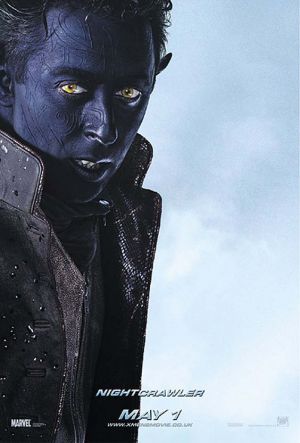

7) X2: X-MEN UNITED (2003)
Conventional wisdom was that an X-Men movie could never be made to the satisfaction of both the demanding fanboy and a non-geeky mainstream audience, but Bryan Singer proved that premise wrong with 2000’s thoughtfully streamlined “X-Men.” The sequel picked up where the first film left off, amping up the metaphorical resonance of the social outsider longing for acceptance while sacrificing none of the epic action. The addition of Alan Cumming’s Nightcrawler, unleashing of Hugh Jackman’s Wolverine and promise of the resurrection of Famke Janssen’s Jean Grey as the Phoenix only whetted the appetites for the third entrant (which, under Brett Ratner’s hand, unfortunately fell like the Angel… er, Icarus).

6) BATMAN BEGINS (2005)
In 1989, comic book fans soiled their underoos over Tim Burton’s “Batman,” a movie that placed the Caped Crusader in a dark context for the first time in any adaptation. But in fact, despite being a cultural phenomenon, “Batman” was a pretty lousy movie (as were its sequels to one degree or another). The Chiropteral palate was cleansed in 2005 by Christopher Nolan’s reboot, which placed the Darknight Detective in a realistic (as possible) context. Taking inspiration from various iconic comics, Nolan and his screenwriting partners envisioned a corrupt urban landscape beyond normal means of salvation; Christian Bale’s Batman—for the first time onscreen—truly strikes fear into the hearts of criminals. A stellar supporting cast adds to the heft, and could only hint at the greatness to come...

5) IRON MAN (2008)
The question of whether or not a B-list comic book character could fill the cineplex seats was answered with wit and style in Jon Favreau’s whip-smart adaptation of Marvel Comics’ Golden Avenger. As personified by the perfectly-cast Robert Downey, Jr., Tony Stark was maybe the most believable superhero alter-ego of them all, his brilliance and courage mitigated by a self-destructive arrogance and narcissism. Yet Downey made him relatable and likable. Maybe most amazingly, the improbable technology of the comic book armor was rendered believable by an army of effects artists who made us believe that a man could fly in a high-tech suit made of metal, powered by a miniature arc reactor.

4) SPIDER-MAN 2 (2004)
The reason there are three sequels on this list is that superhero movies often benefit from not having to retell an oft-known origin story in a subsequent outing. Sam Raimi’s second Spidey film draws on some classic Marvel Comics storylines as Peter Parker struggles with his desire for a normal life beyond the responsibility his great power demands. Alfred Molina’s Dr. Octopus is a perfectly layered bad guy, while Tobey Maguire’s ego pushes for more screen time sans the full face mask of the web slinger. The CGi effects are far superior to the first film’s videogame swinging scenes, and the whole thing has a goofy sincerity to it that makes it feel like a timeless chunk of pop culture (sadly, the same cannot be said of the studio-co-opted third film).

3) THE INCREDIBLES (2004)
The only one of these ten films not based on an established property, “The Incredibles” is just too good to leave off this list. Credit writer / director Brad Bird, who proved he knows from heroes with 1999’s “The Iron Giant.” Sure, the exploits of Mr. Incredible and his family of “supers” are merely dressing on a story that’s more about the importance of family and embracing who you are, but few superhero movies feature the kind of panache, heart and thrills that fill this Pixar flick. Bird (who graduated to live action features with last year’s “Mission: Impossible - Ghost Protocol”) has stated that he’s not really interested in doing another superhero movie, but many fanboys would love to see him take the reins of a live adaptation of some beloved character or team (If “The Justice League” ever gets made, I can think of no one better to tackle it).

2) THE DARK KNIGHT (2008)
Christopher Nolan’s sequel took everything that was great about “Batman Begins” and upped the ante tenfold. “The Dark Knight” works on every level, as an action film, a superhero movie, a crime drama, a character study and an intense psychological thriller. At its heart is the key tenet of Batman’s character (one that was callously ignored in Tim Burton’s plodding exercises in style)—the line he will not cross, his refusal to take a life, no matter how vile. Yes, Christian Bale’s growling can be funny if taken out of context, but every performance in this film—not just Heath Ledger as the Joker—carries the weight of a person pushed to his or her limit. Nolan may be the single best mainstream filmmaker of his time; he’s a modern day Hitchcock, able to communicate his distinct vision to all of his collaborators and create smart, stylish, emotionally moving motion pictures that are also fun. Simply put, “The Dark Knight” is a masterpiece and its snub for Best Picture (and Director) in ’09 is one of many reasons I never take the Oscars® seriously.

1) SUPERMAN (1978)
Richard Donner’s groundbreaking 1978 blockbuster set the standard for the modern superhero movie (so much so that it’s hard to find a filmmaker’s commentary on any entrant in that genre since that doesn’t reference it). While there are certainly some plot holes and jarring tonal shifts in both story and acting, the film as a whole treated its source material with affection and respect (a first for a movie based on a comic book), evoking nothing less than a modern myth. On top of that, Superman’s pre-CG flying effects necessitated creating entirely new filmmaking technology. And, of course, Christopher Reeve’s charming, laid back performance proved that you could still employ genuine acting chops dressed in red, blue and yellow spandex. Is it a perfect film? No, but it’s the only one on this list that’s a certifiable classic, and without it, this countdown might not even exist.

HONORABLE MENTIONS go to “Superman II,” “Spider-Man,” “X-Men,” “Batman: Mask of the Phantasm,” Ang Lee’s misunderstood “Hulk,” “Blade II,” and okay, I guess the first installment of “The Matrix.” But I will not put Burton’s “Batman” on this list, ever, no matter how much you whine.
_________________________________________________________
ORIGINALLY POSTED on Starpulse.com

Wednesday, April 25, 2012

COLLECTOR'S EDITION Excerpt #7: Comic Book Crushes

From the 1960s through today, superhero fans have generally had to espouse a preference for one of the two major mainstream comic book publishers, aligning themselves with either DC or Marvel. While I certainly read my share of Marvel books (SPIDER-MAN, FANTASTIC FOUR and CAPTAIN AMERICA to name a few), I was always a DC Comics guy. The fictional universe that held Superman, Batman, the Flash, Green Lantern, the Teen Titans, Wonder Woman, Aquaman and their B-list brethren just connected with me more than Marvel’s angst-ridden roster of superheroes. Superman liked life. Batman at least internalized his conflict. Every single Marvel hero was always whining about something.

I think I reacted more positively to DC’s editorial sensibility, even though it was very much in flux at the time. DC’s Bronze Era books reflected a creative struggle between the old guard (comics veterans who often disdained their field as disposable pap for children) and the new breed of hippie upstarts (who saw comics as a vital and vibrant art form capable of tackling sophisticated subject matter), and this infusion of energy into a formerly staid universe created a sensibility that was simultaneously comforting and challenging, searing itself into my consciousness. Also, DC’s covers often featured their super-stars in iconic poses, creating indelible poster-like images that this wannabe cartoonist loved to redraw.

As for the other publishers, I read a bunch of Harvey Comics’ kiddie fare through elementary school. Gold Key Comics often utilized paintings for their cover art, which always put me off, predicating a life’s preference for low art over high. I liked the mid-70s run of Atlas Comics, the company begun by ex-Marvel publisher Martin Goodman, but that only lasted a few years. Charlton Comics, with one big exception, always felt substandard to me, with their often inferior artwork, cheap printing, sloppy lettering, weak design (even as a kid, I thought their logo was clunky) and mostly forgettable characters and titles.

The exception was E-MAN, a truly groovy Charlton superhero comic that premiered in 1973. Created by writer Nicola Cuti and artist Joe Staton, E-man was a parcel of pure energy that wandered the universe for thousands of years before landing on Earth, ending up trapped in a light bulb in the dressing room of exotic dancer Nova Kane.

You heard me right. A superhero comic where the female lead was a buxom, red-headed stripper (her first line in #1: “It’s going to feel good to get into clothes”). The energy makes Nova smash the light bulb with her high heel and upon release, takes human form (it can assume any form of energy or matter, which is convenient), fashioning an orange and yellow costume with Albert Einstein’s E=MC2 equation as his chest emblem (which must’ve been a pain to draw in every panel).

E-Man often played like a cosmic Plastic Man, fashioning utilitarian tools from his limbs, altering his shape to battle otherworldly giant brains, underwater despots and omnipotent farmer’s daughters. It was a truly weird combination of sci-fi, superheroics and sex. Implied, to be sure, but E-MAN featured more sexuality than any other superhero comic of its time. In issue #2, Nova makes breakfast while wearing only jeans and a purple short-sleeved shirt, completely unbuttoned and hanging open to show a hint of breast.

Certainly, Nova Kane awakened something in me, but she was hardly the only comic book female to nudge my pubescence into bloom. Not so much the ladies of DC and Marvel, as, clad in skintight spandex or not, they usually lacked any kind of sexual identity due to the moral restrictions of the self-imposed Comics Code Authority. Sure, Wonder Woman may have spent a lot of time being bound and gagged while wearing a bustier and high heels, but everyone knew that Steve Trevor had been suffering from a case of blue balls since he began relentlessly pursuing his “angel” in 1941.

No, my comic book crushes mostly lived in Riverdale, in the seemingly chaste and innocent world of Archie Comics. Anyone who’s never actually read an Archie comic probably has this image of a LEAVE IT TO BEAVER kind of whitewashed, suburban, sexless milieu, but that wasn’t exactly the case, thanks primarily to an artist named Dan DeCarlo.

After cutting his teeth drawing MILLIE THE MODEL and other working gal comics for Atlas / Timely / Marvel in the 1950s, DeCarlo became a pre-eminent pin-up cartoonist for the Humorama line of girlie magazines. When he moved to Archie in the late 1950s, his clean, expressive cartooning style quickly became the new model for the Riverdale gang. But Dan brought his pin-up sensibility along for the ride as well—albeit with the necessary breast reductions—as well as a modern esthetic that put the gang into actual contemporary fashions (a rarity in comics). For the first time, these characters felt real.

Betty and Veronica—and let’s not forget Josie, Melody, Sabrina and THAT WILKIN BOY’s girlfriend Samantha—modeled bathing suits and mini-skirts and ran around barefoot in cutoff jeans and peered coyly over their shoulders through batted eyelashes as the boys fell over each other trying to win their affections. On many a comic book cover, the girls posed seductively on beach blankets while Archie, Reggie and dozens of anonymous extras literally knelt at their feet to do their bidding.

There are a few particular DeCarlo covers that resonated so strongly with my budding pubescence that they still make me feel a little… odd… when I see them. One of them, LAUGH COMICS #269 (Aug. 1973) depicts Archie and Reggie preening in front of two nameless bikini-clad hotties, asking, “How would you chicks like to meet the handsomest dudes on the beach?” The women are distinctly unimpressed, as the brunette with her hair in a bun and a flower appliqué just above her knee dismisses, “Fine! Are these HANDSOME DUDES your friends?” (Meanwhile, in the background, the girl-hating Jughead races towards the water with his surfboard). Even at the tender age of nine, I shared Archie’s priorities. These girls were hot, and since they weren’t any of the established cast of characters, their personalities were left to the reader’s imagination. Were they really aloof… or just playing games? My mind boggled.

As I graduated from elementary school to junior high, peer pressure began to mount to abandon such childish pursuits as THE AMAZING SPIDER-MAN and SWAMP THING. We were almost teenagers, we were supposed to ditch the kid stuff and start caring about rock music and boobs. I kinda liked rock music. I definitely liked boobs. But I still liked comic books more. And I really didn’t care what anybody else thought.
_________________________________________________________________
from the forthcoming book, COLLECTOR'S EDITION: Confessions of a Pop Culture Obsessive-Compulsive by and ©Karl Heitmueller Jr. 

Scissor Sister

I dunno... is it me, or does this just seem wrong?


Monday, April 23, 2012

Hair Affair

I love when Archie Comics tackled rock and roll in the silver and bronze eras... sometimes they captured the correct "vibe" (as the Seeker used to say), but often it would be obvious you were reading the works of middle aged men who didn't really get it. This page from ARCHIE'S JOKE BOOK #116 (1967) is a hilarious example that falls somewhere between. Fred Andrews isn't really showing disdain for the music, but it's obvious that the artist didn't spend a lot of time doing research on what the bands actually looked like. Is that Bob Dylan or Beethoven? I may post more Archie Rock & Roll strips if I find the time to do some scanning...


©Archie Comics

Friday, April 06, 2012

80s Flashback: Stephen DeStefano does BEAT COMICS!

In the 1980s, I published a fistful of my own comics, two issues of a superhero book entitled THUNDERSTORM, followed by six issues of an anthology book called BEAT COMICS. I've never posted anything from any of those comics on my art site, TOUGH GUY Goods & Services because they're really, really... old. At some point, I may put samples from some of the better stuff on here, but for now I wanted to share one of the nice side benefits of making your own comics back in the day.

Through my friend Amy, I got to meet Stephen DeStefano, a cartoonist whose DC Comics book, 'MAZING MAN (with writer Bob Rozakis) was one of the few whimsical highlights of the dawn of the Dark Age of Comics. I sent Stephen copies of my stuff and we became sorta pen pals for a while. The highlights of Stephen's letters were drawings he included of some of my characters. It was as big a thrill to me as when George Perez drew my character Lumino for the cover of ADVENTURE COMICS #485.

Below are two of Stephen's drawings, the first being Thunderstorm with Stephen's own character, Jibby th' Nob. The second is a character created by my sometimes writing partner Nathan Pease named Homunculus. Homunculus was a secondary character in a BEAT COMICS "reboot" of our high school comic book, THE DISINTEGRATOR. Homunculus was a wannabe hero who would ride the subways of Washington DC, punching anyone who committed infractions such as smoking or littering, then giving a dollar to anyone who may have been inconvenienced. Nathan and I never finished our Disintegrator story (we should team up to wrap that up someday), but Stephen thought Homunculus was a pretty funny character.

Stephen's expressive linework is more than evident in these lovely pieces (which put anything I ever drew to shame). He's one of those rare comic books artists who doesn't think "cartoonist" is a pejorative term.

These days, Stephen and I live in the same town (well, neighboring towns) and I see him every once in a while. Like most friendships these days, we primarily communicate via Facebook. Stephen does storyboard work for animation and the odd comic job now and then (he's also the official artist for most pieces of Popeye merchandising you see). You should pick up LUCKY IN LOVE, a perfectly lovely tome he illustrated for George Chieffet.


Tuesday, March 20, 2012

Why JOHN CARTER Flopped at the Box Office.

I was kinda looking forward to Disney's JOHN CARTER adaptation. I'd only read a few of the comic book versions, but Edgar Rice Burroughs' seminal sci-fi adventure set the template for every planet hopping hero from Buck Rogers to Adam Strange. Plus, any fanboy can tell you that Dejah Thoris... is hot.

But I didn't go see JOHN CARTER and I probably won't (until it comes to cable, no doubt in a few weeks at this point). Part of it is the mostly awful reviews and word of mouth (although I don't always trust either one of those critical parameters). Part of it is the previews didn't really look all that promising. I was a little bemused by the fact that Disney (a company I hate), due to the failure of MARS NEEDS MOMS, felt that the public just held an overall animosity towards our celestial red neighbor, and thus removed any reference to the planet from the title. Yes, indeed, Disney marketing geniuses, JOHN CARTER is a much better title than WARLORD OF MARS. Idiots. The dull moniker selected by the cowed company makes the film sound like a biopic about an accountant.

But the other night, while catching up on some tee-vee via the DVR, I saw this ad for the film (which aired back when there was still hope that the century-old character could inspire a new generation in his first major media adaptation), and it all became clear.

The movie flopped because people had no idea when it was coming out. When the hell is Frida Y?

It's called kerning, people. And it matters. And in fact, the letter spacing on the whole word is messed up. Look at the distance between the F and the R, then compare that to the I and the D. There's no consistency whatsoever (the Y is kerned at the top "Friday," but the other discrepancies remain). For a design aberration like this to come from a media giant is inexcusable. Who set this bumper, a Thern?